September 16 - November 20, 2026
Installation Views | Essay | For availability and pricing, please contact the gallery at 212-581-1657
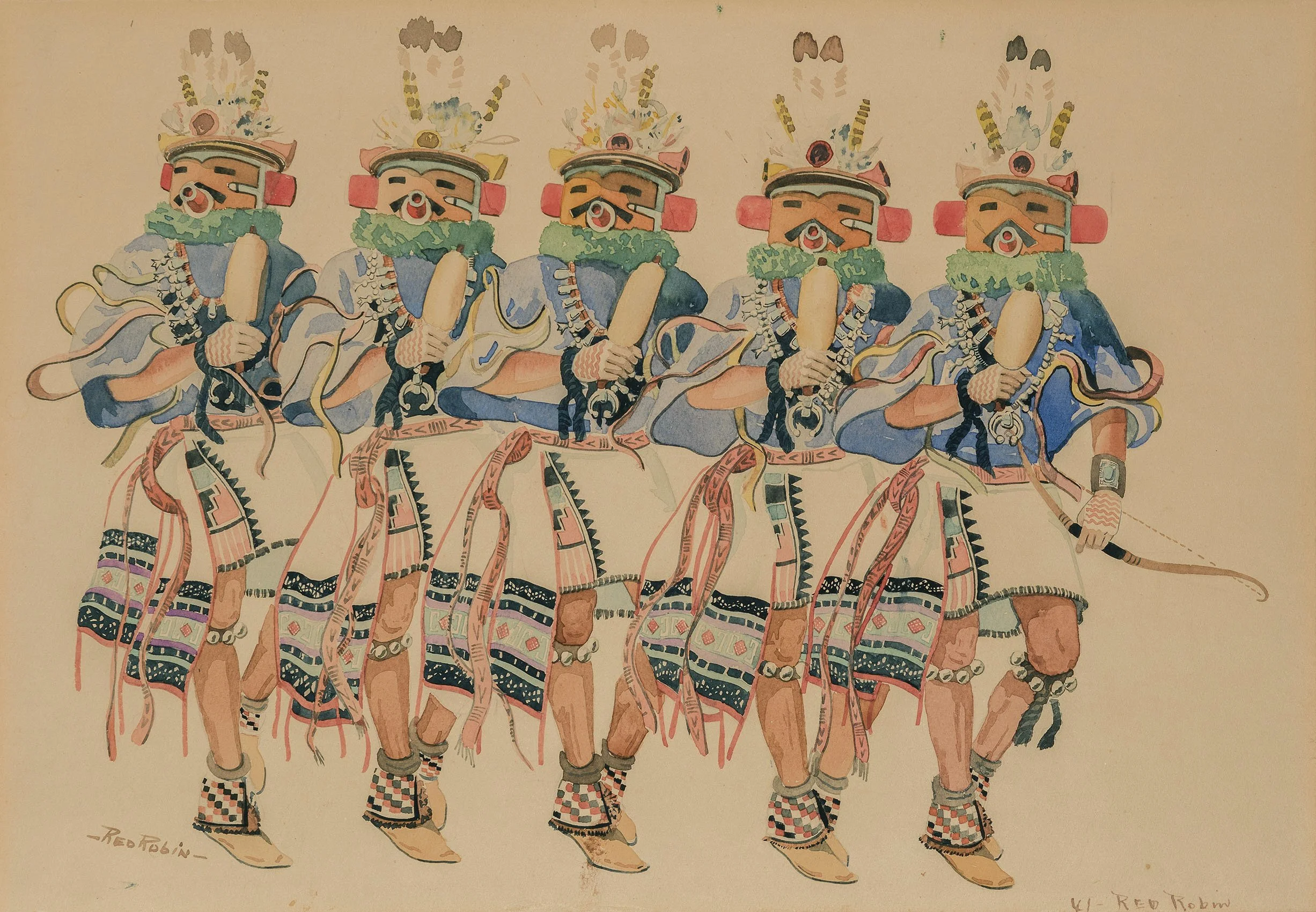
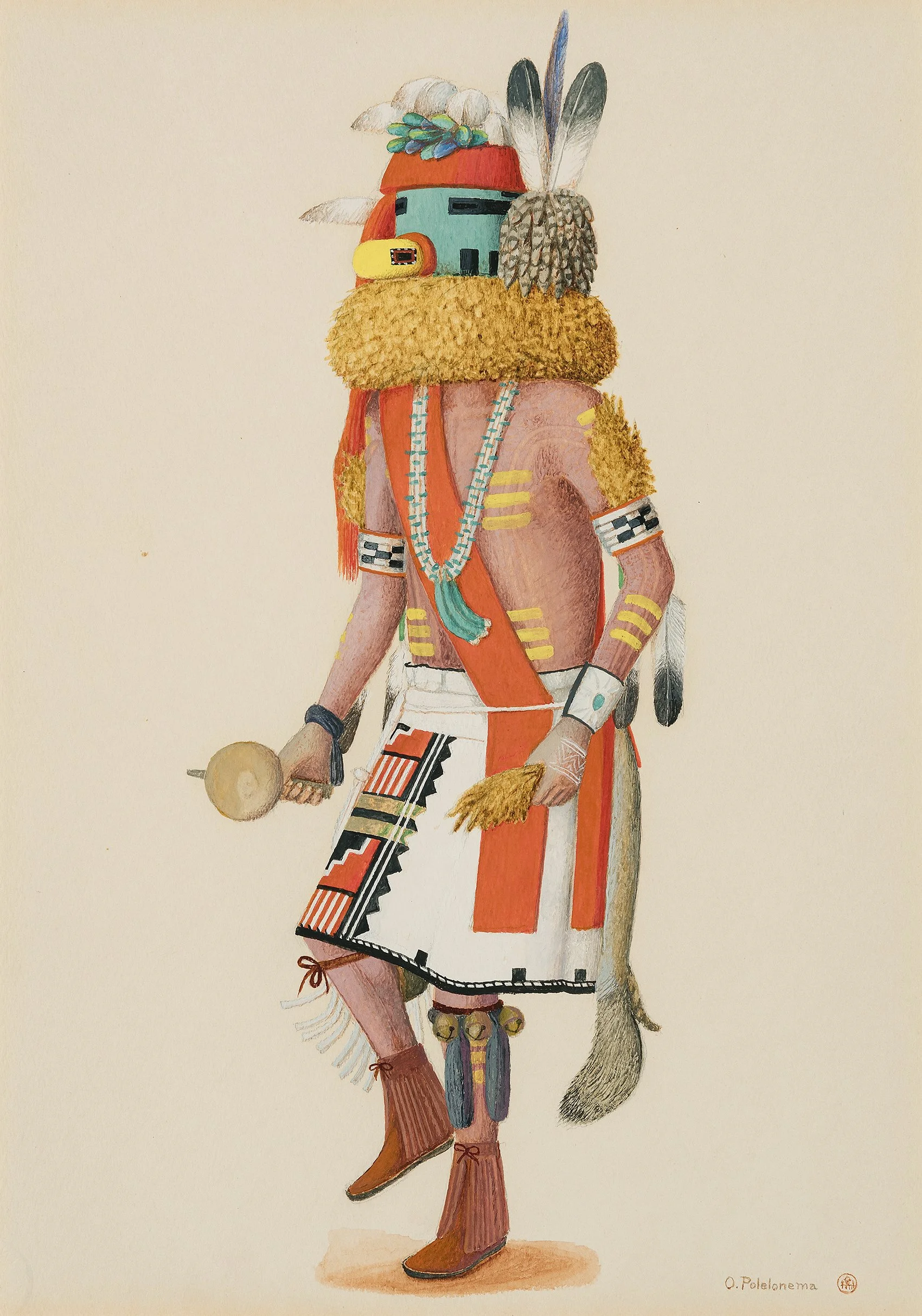
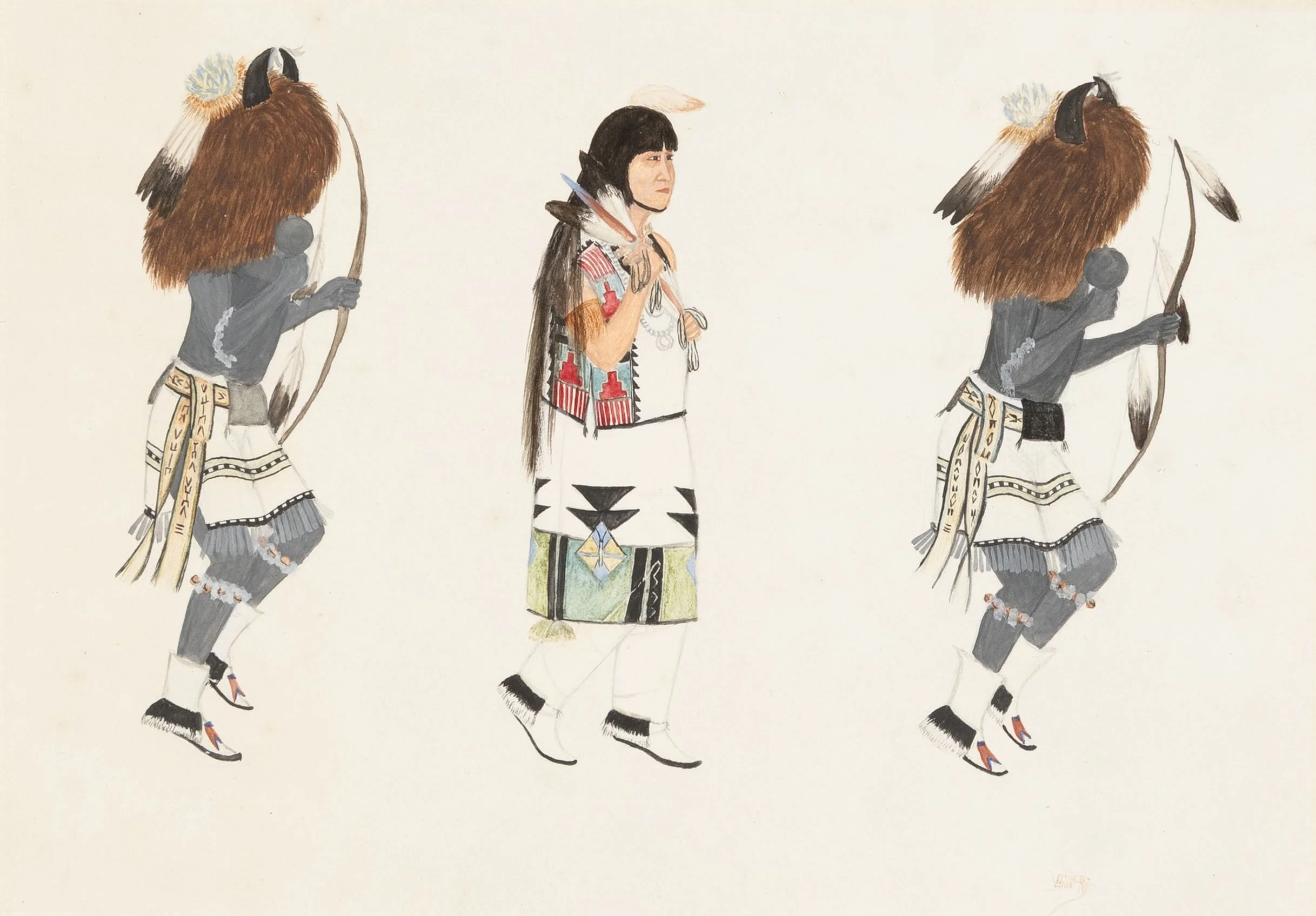
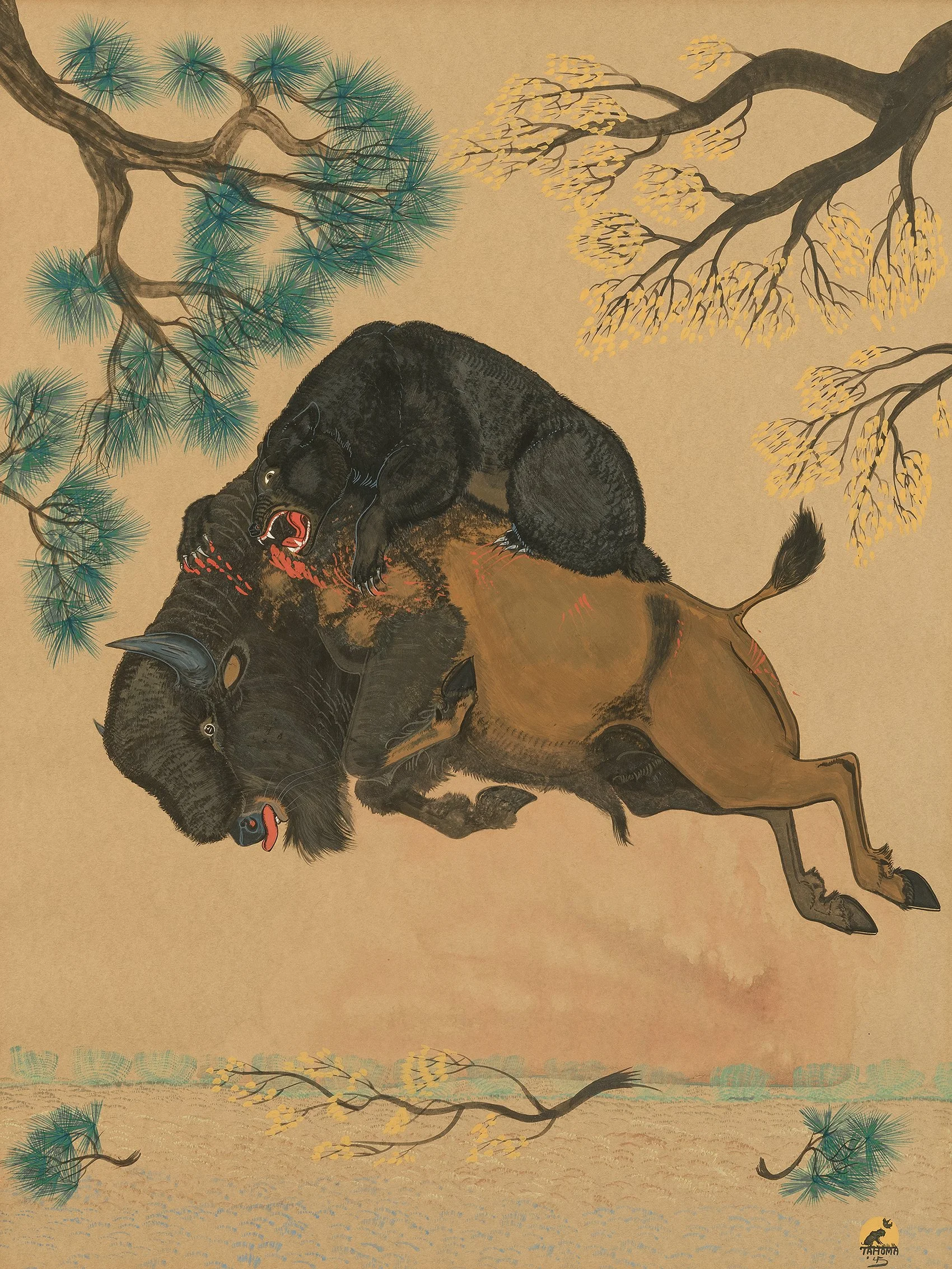
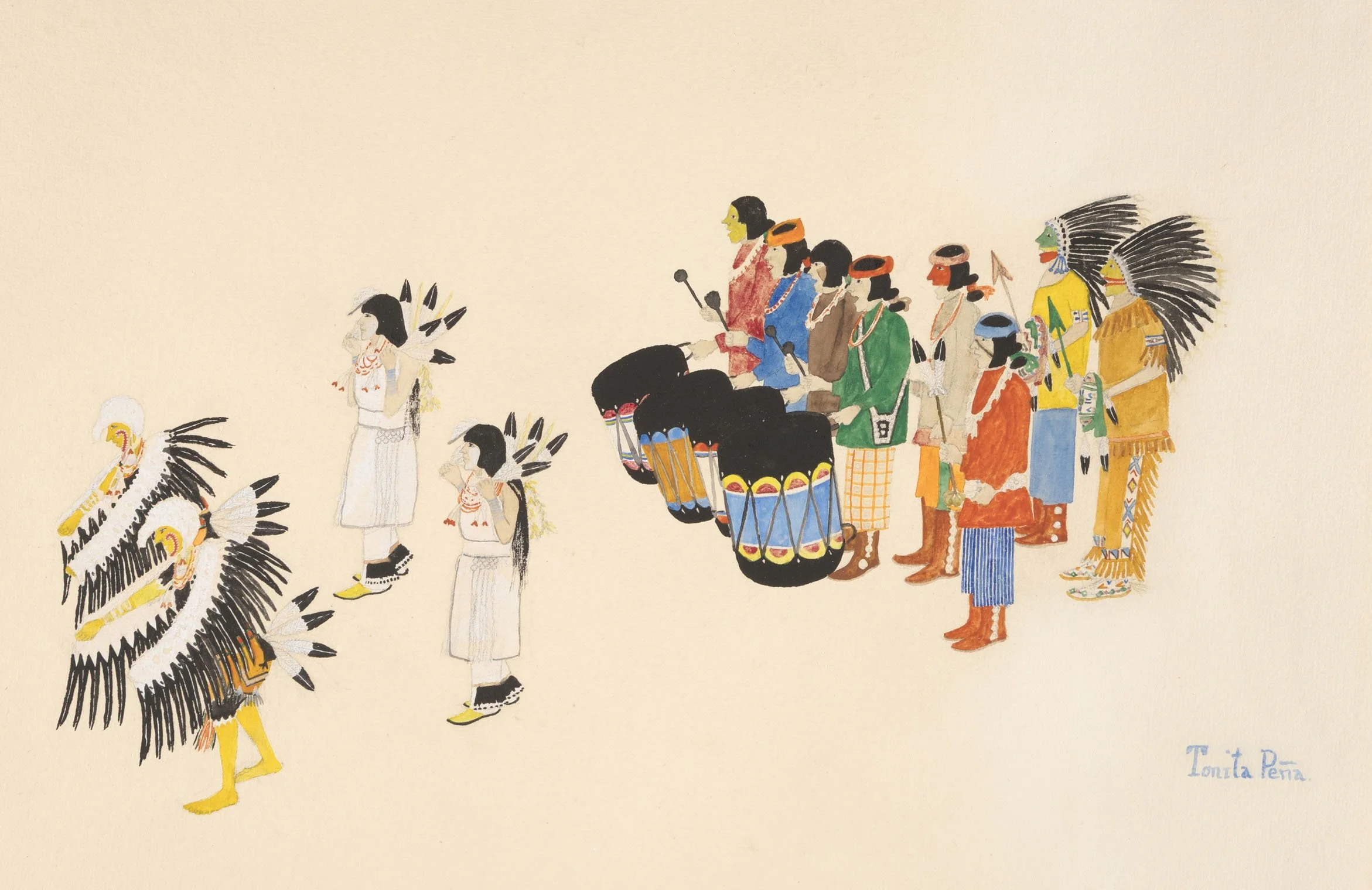
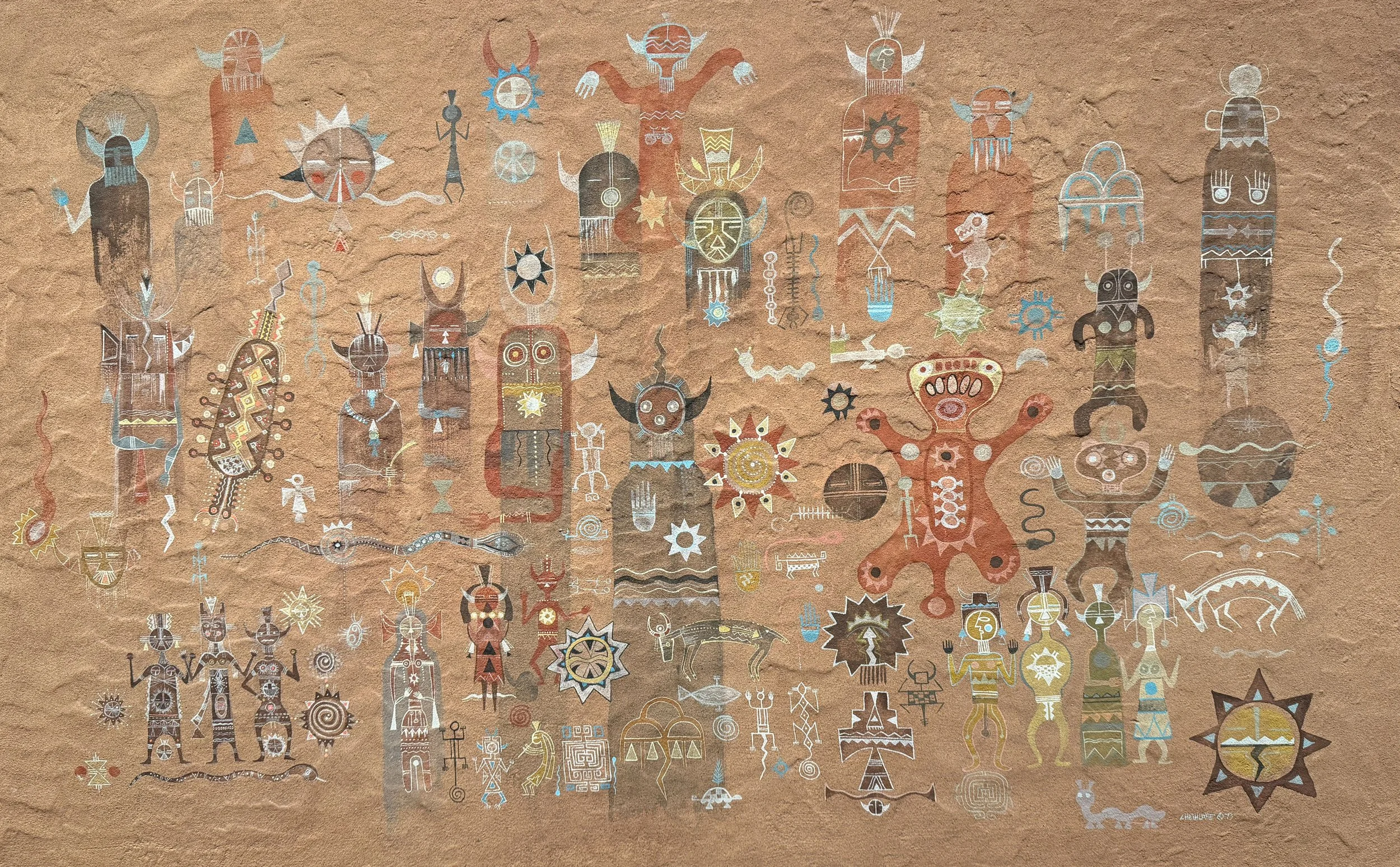
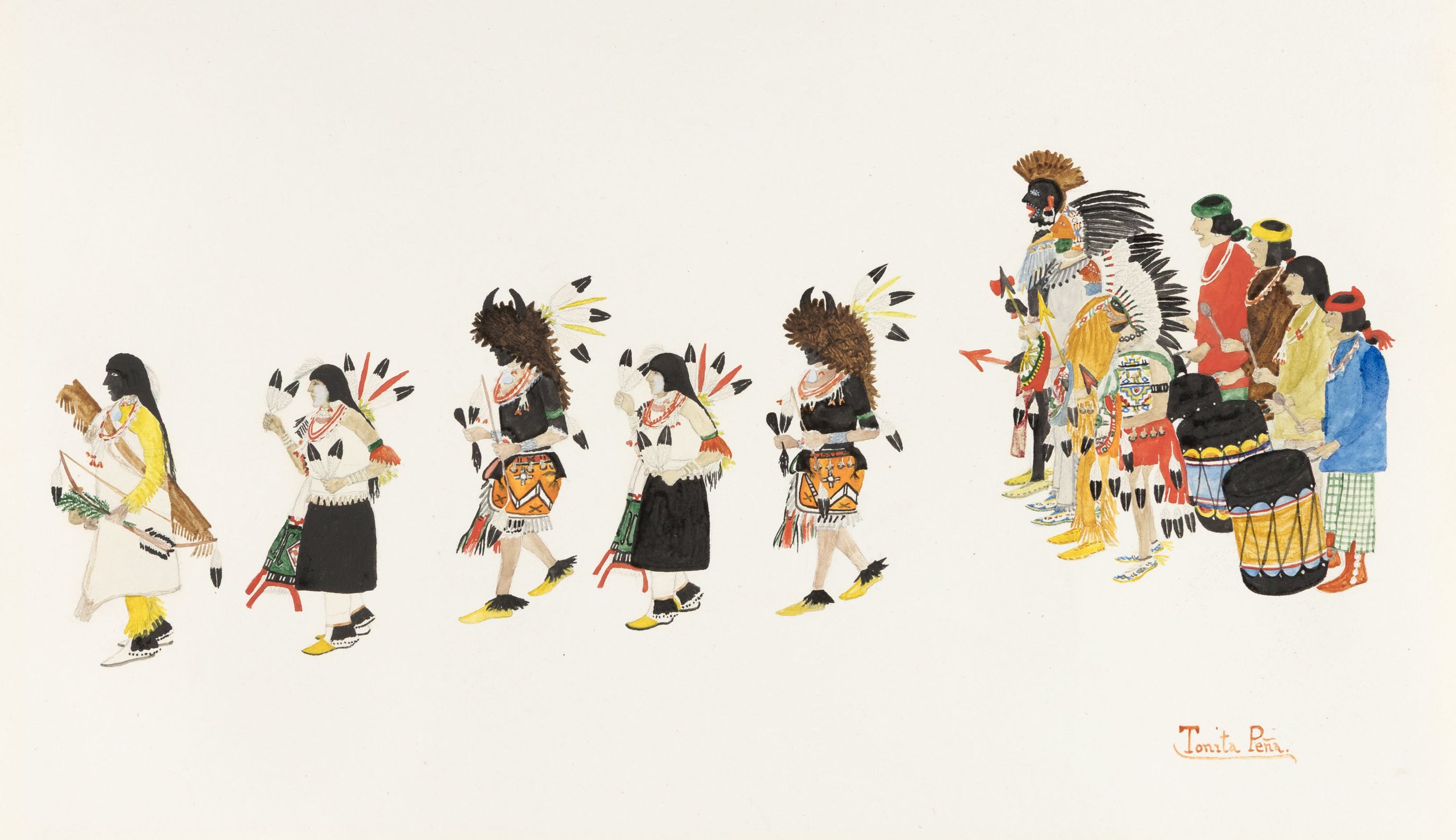
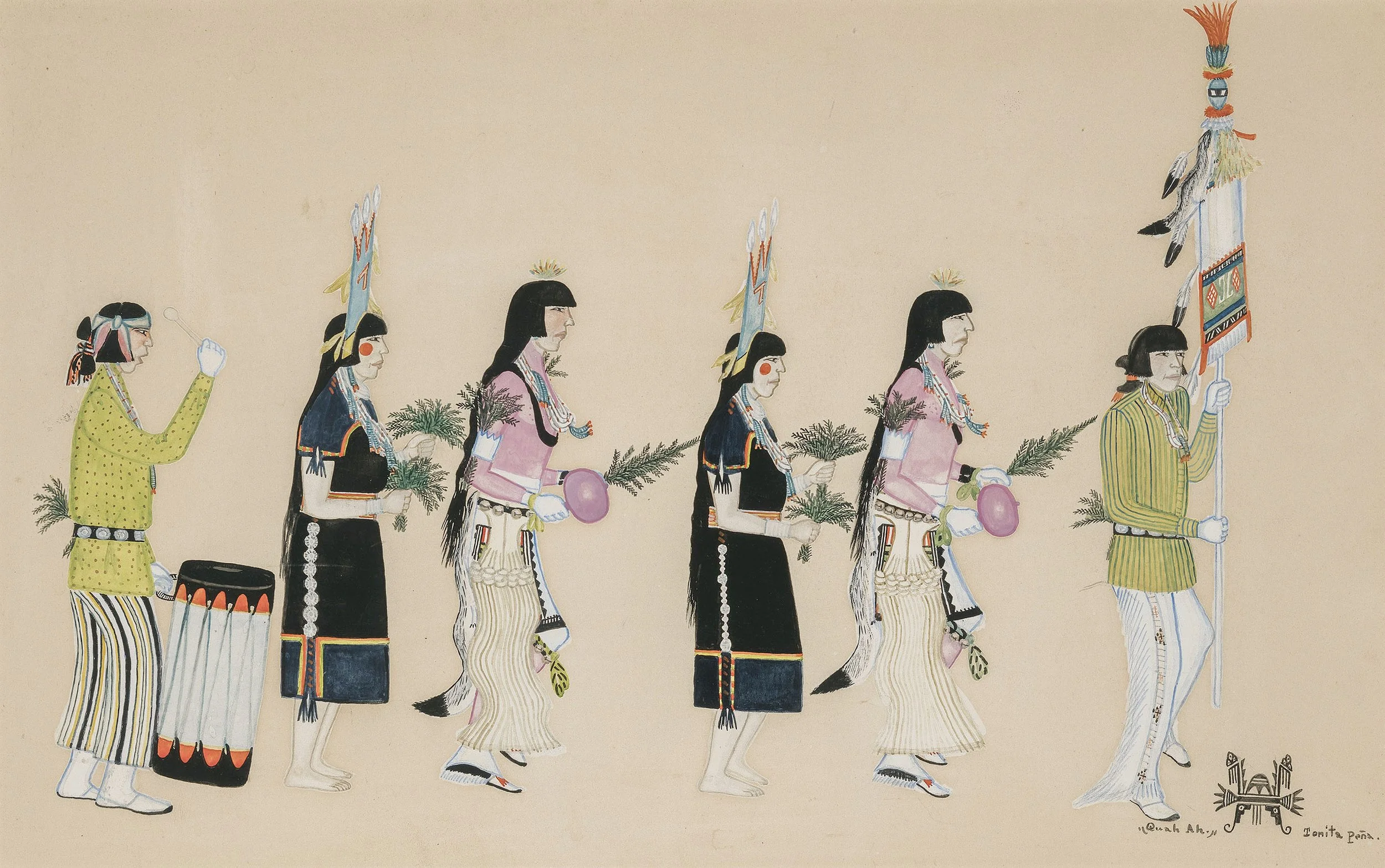
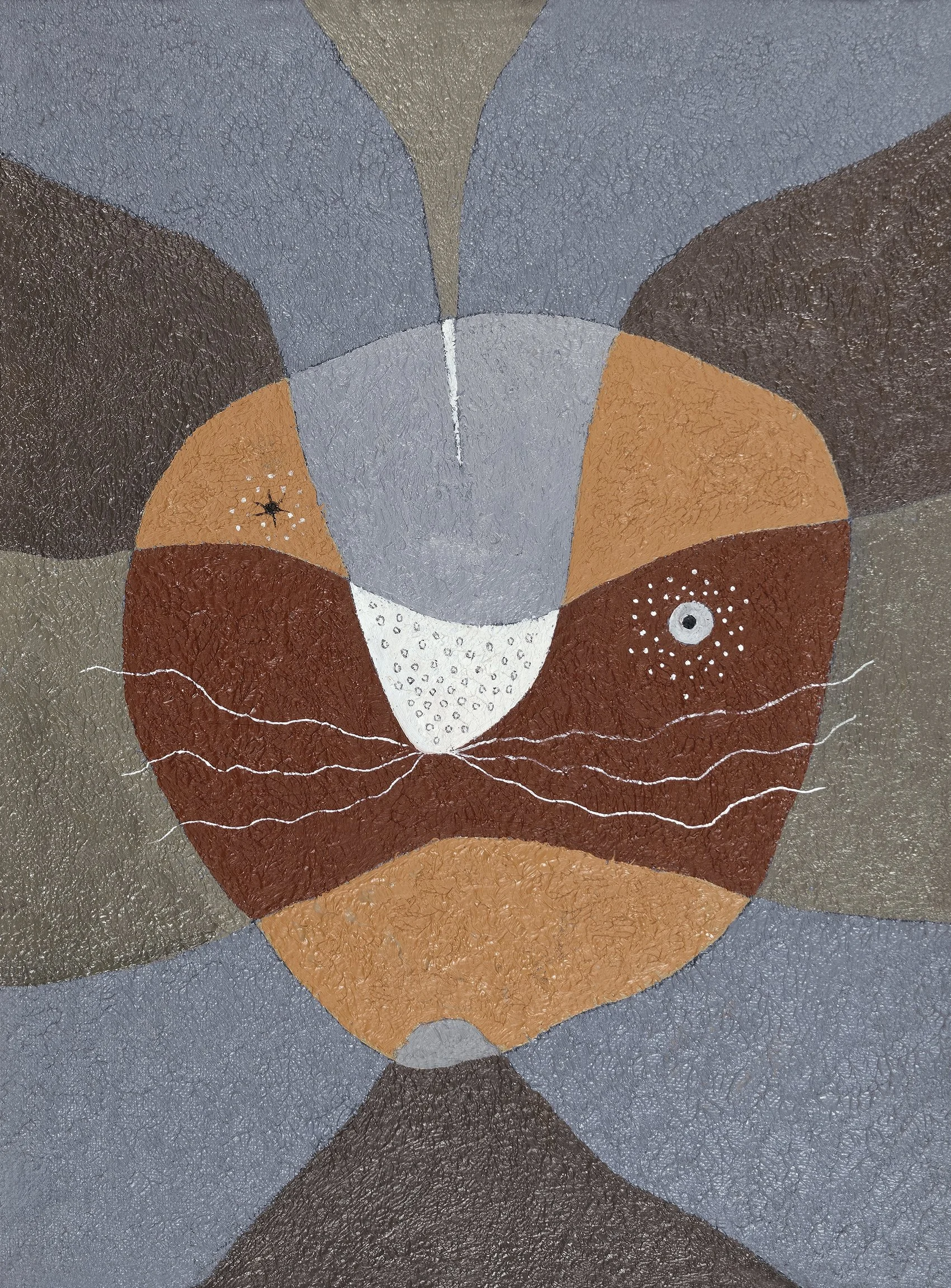
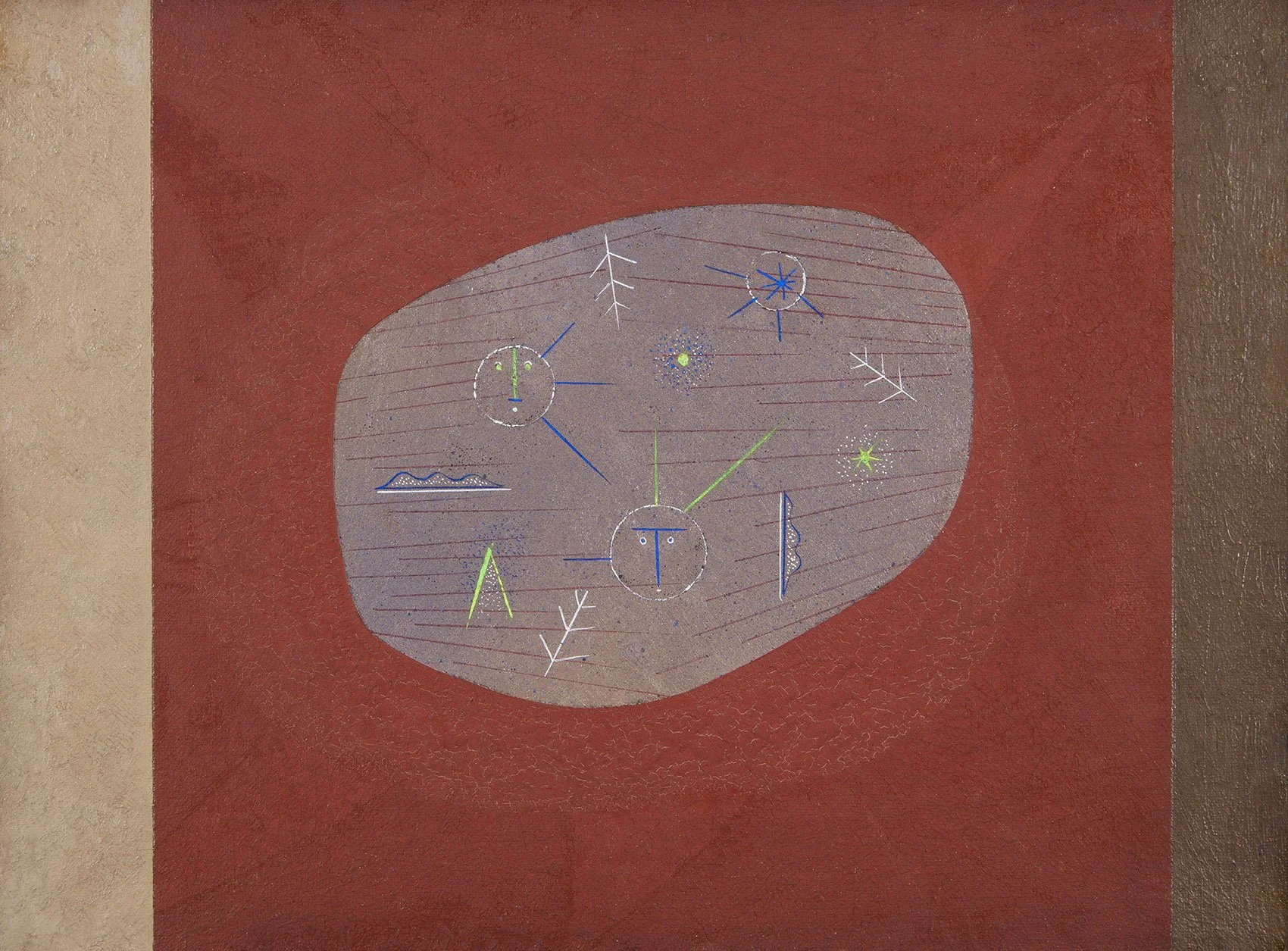
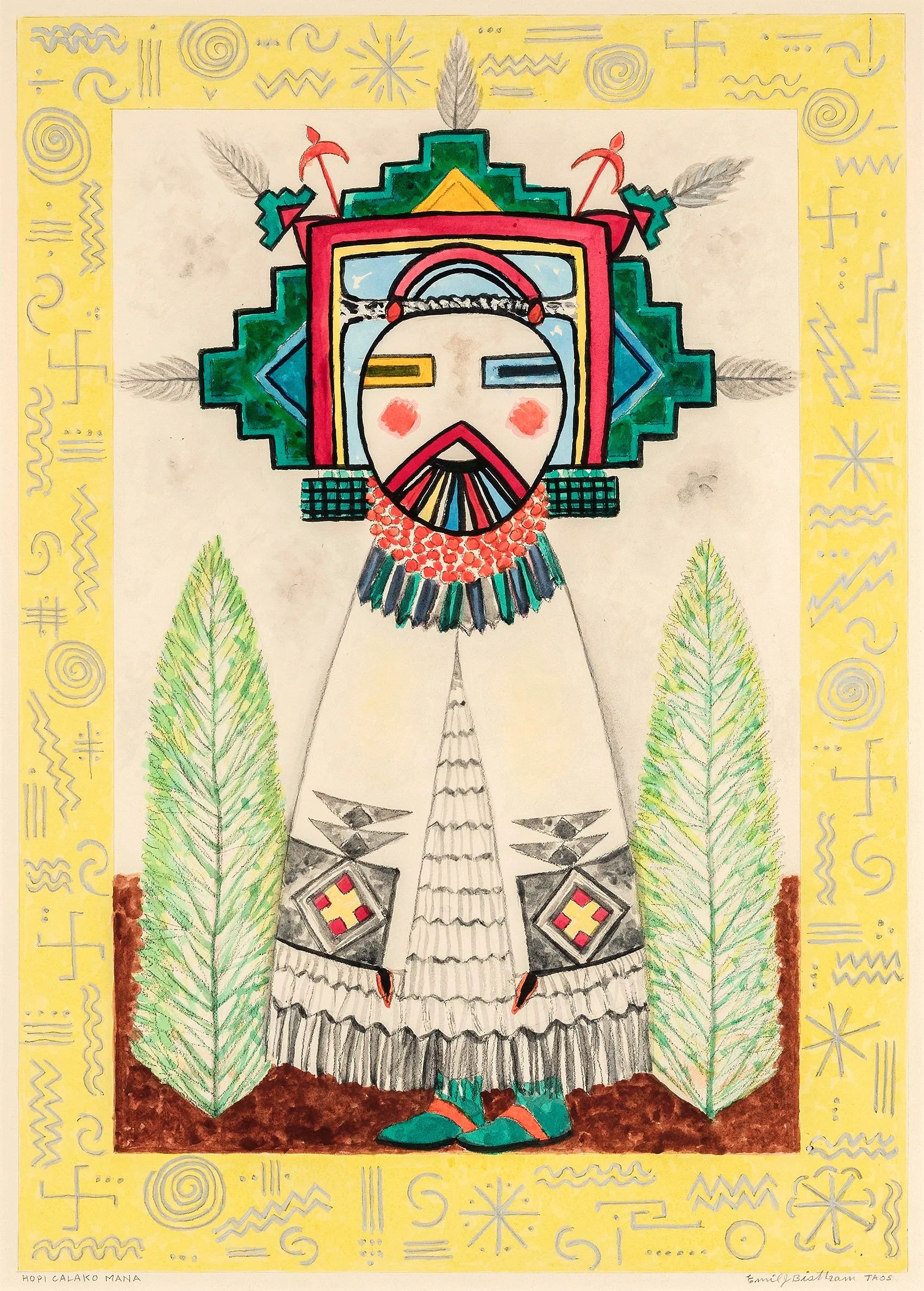
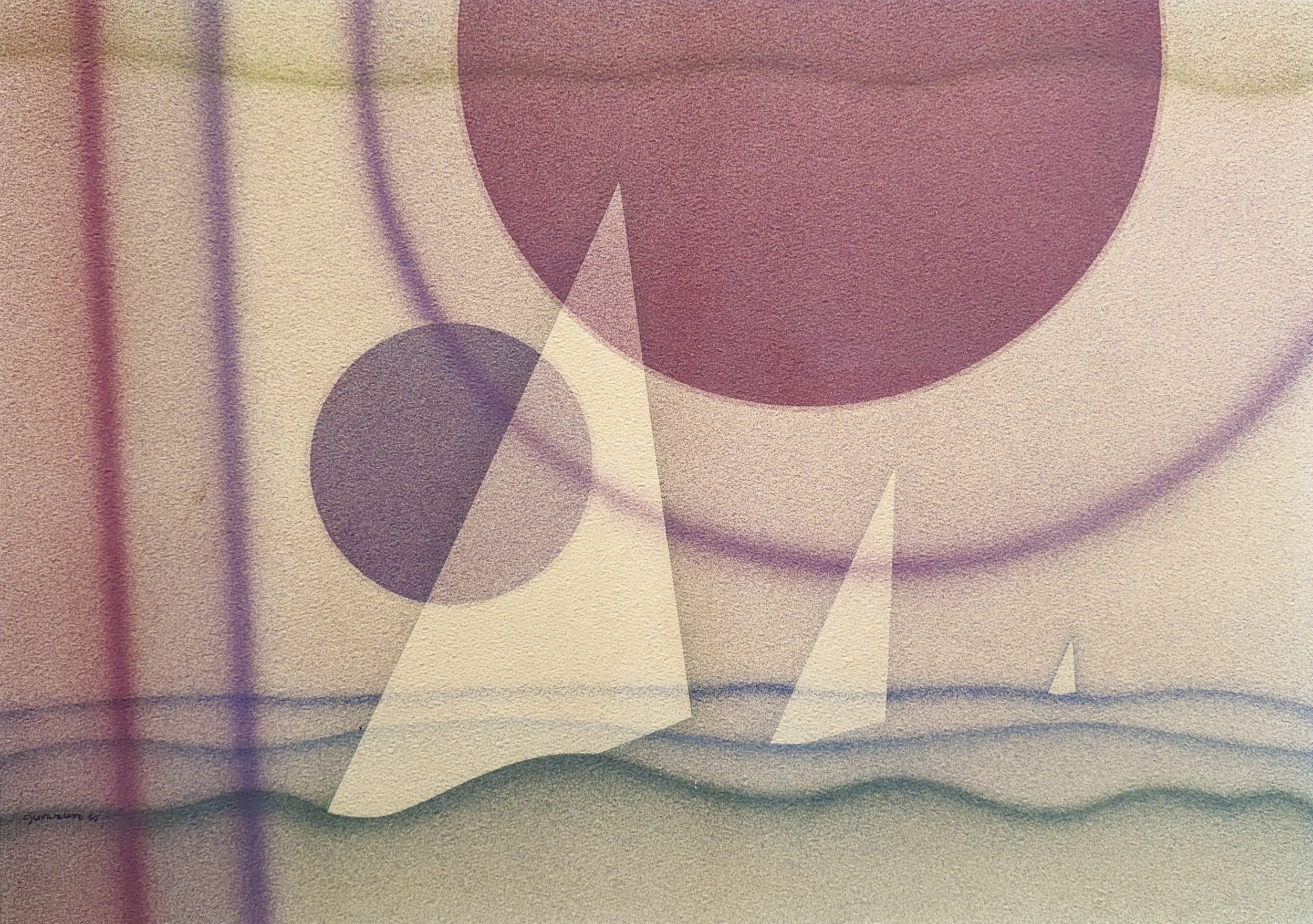
Installation Views
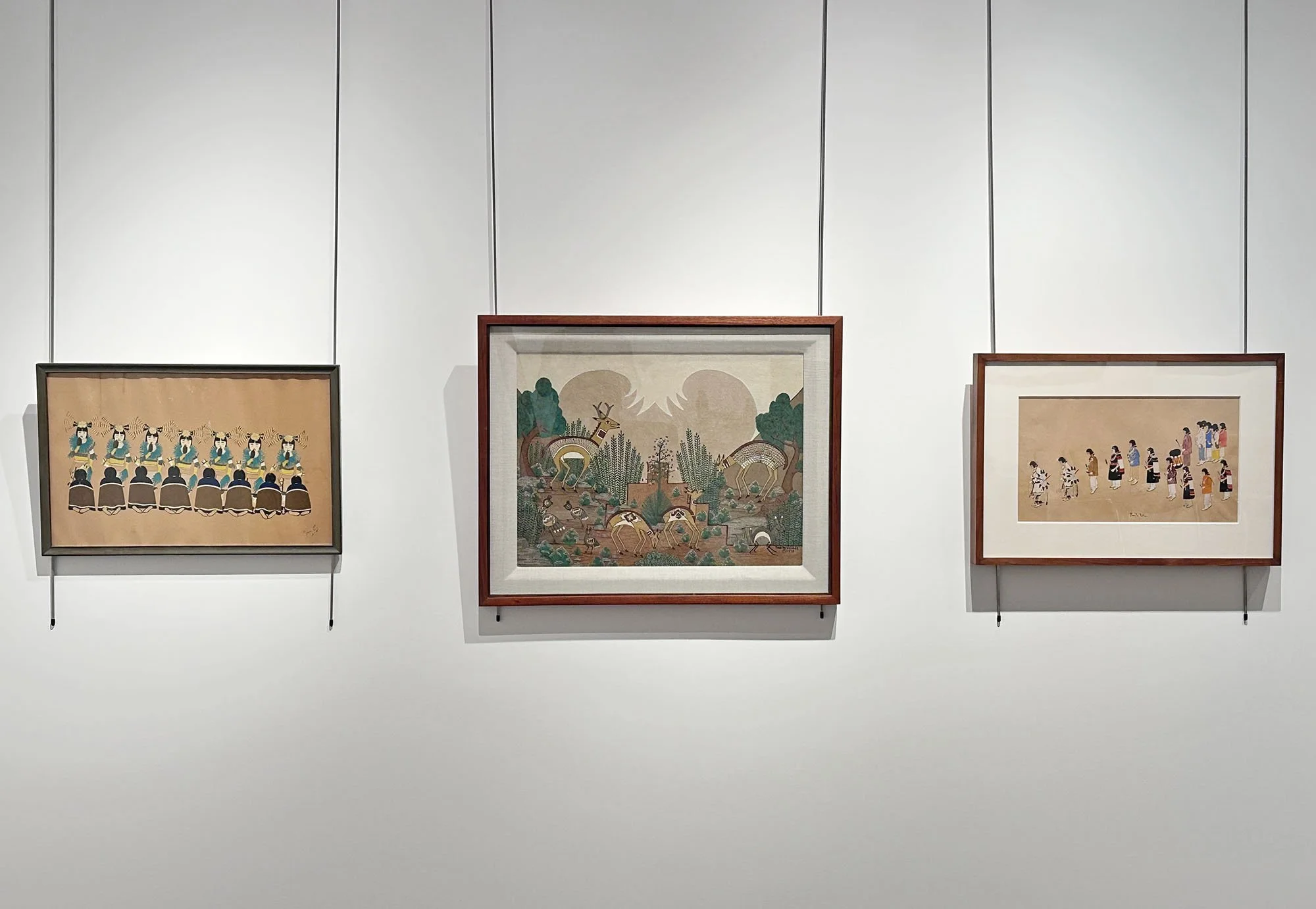
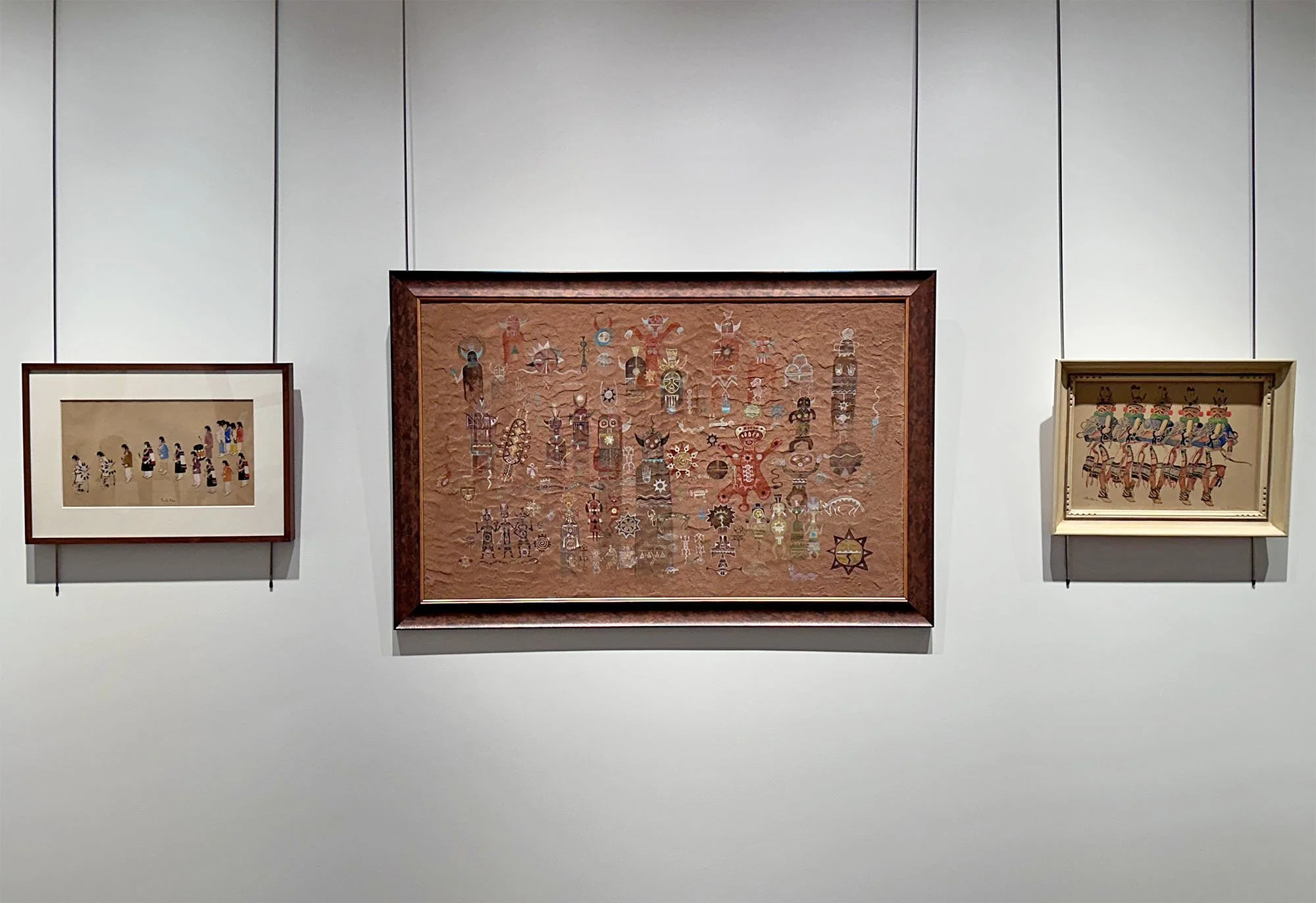
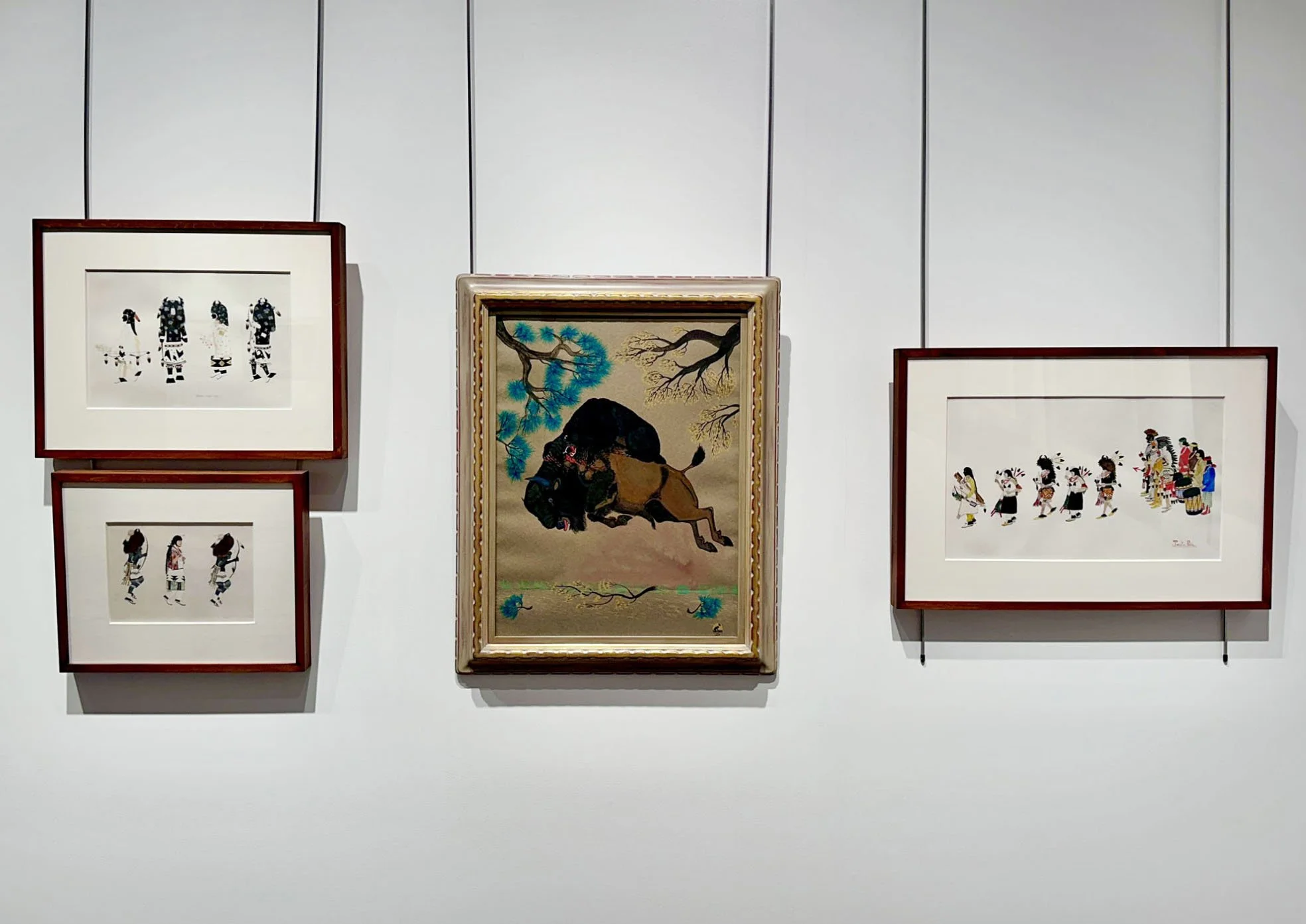
Essay by Deedee Wigmore
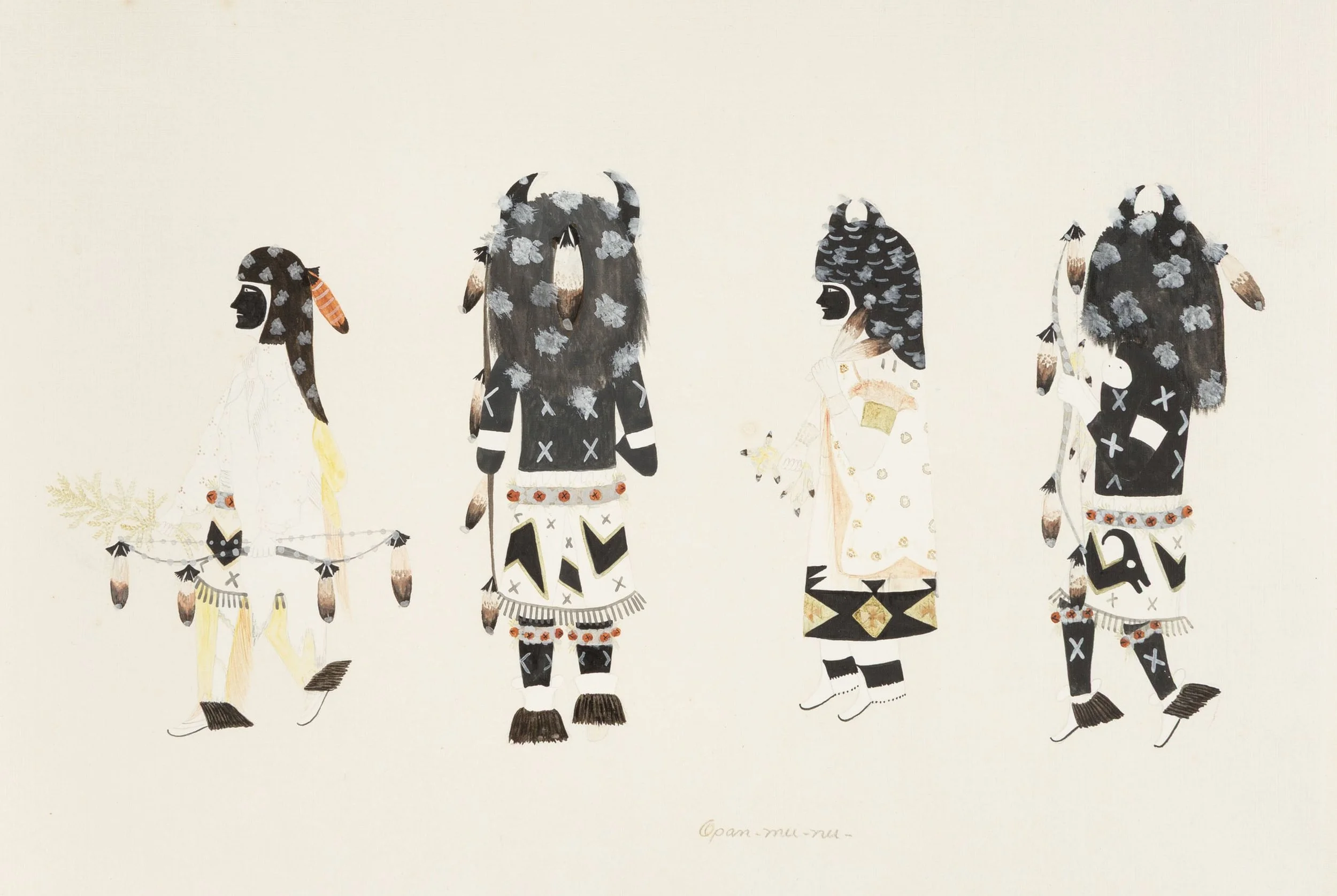
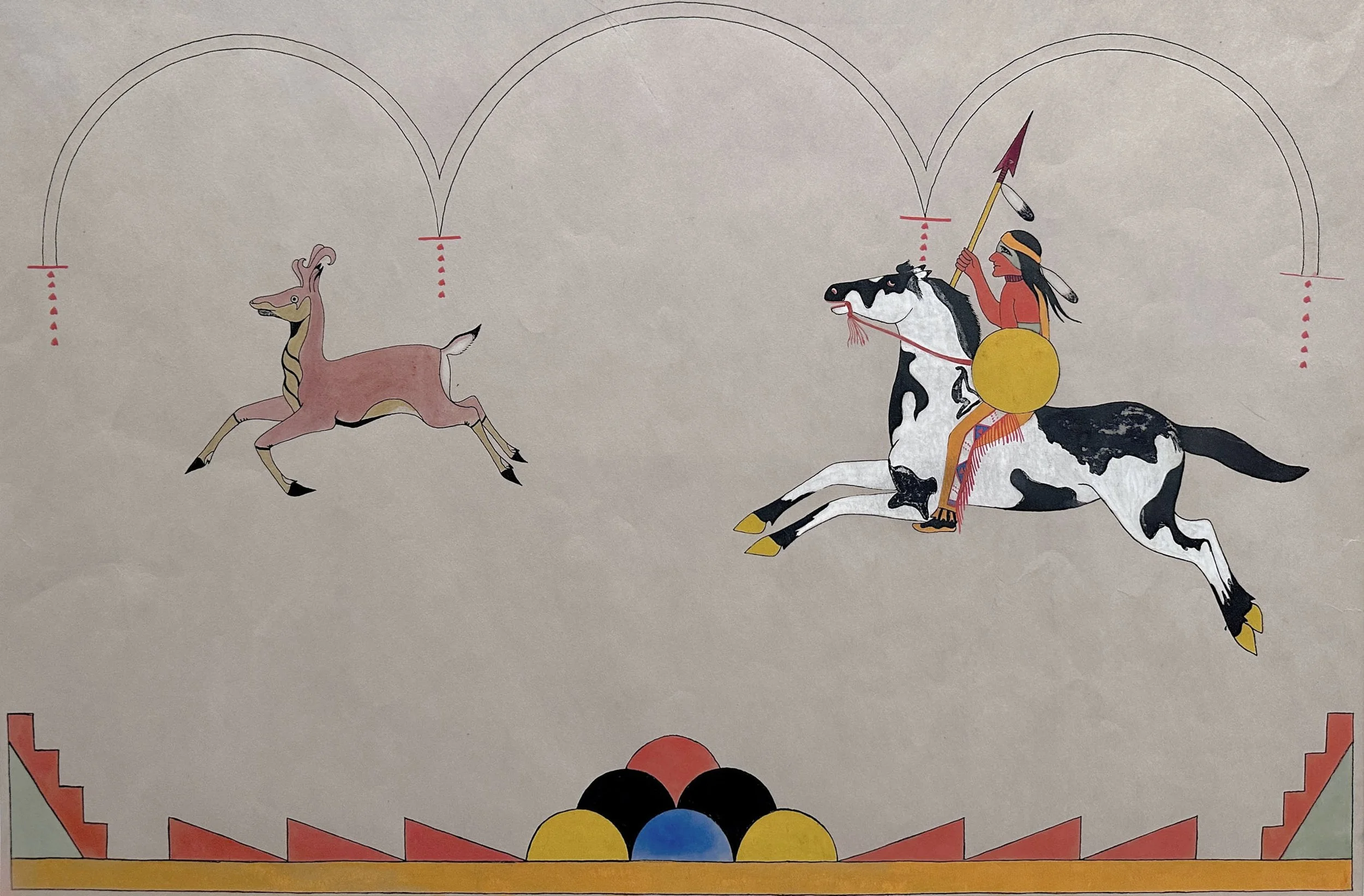
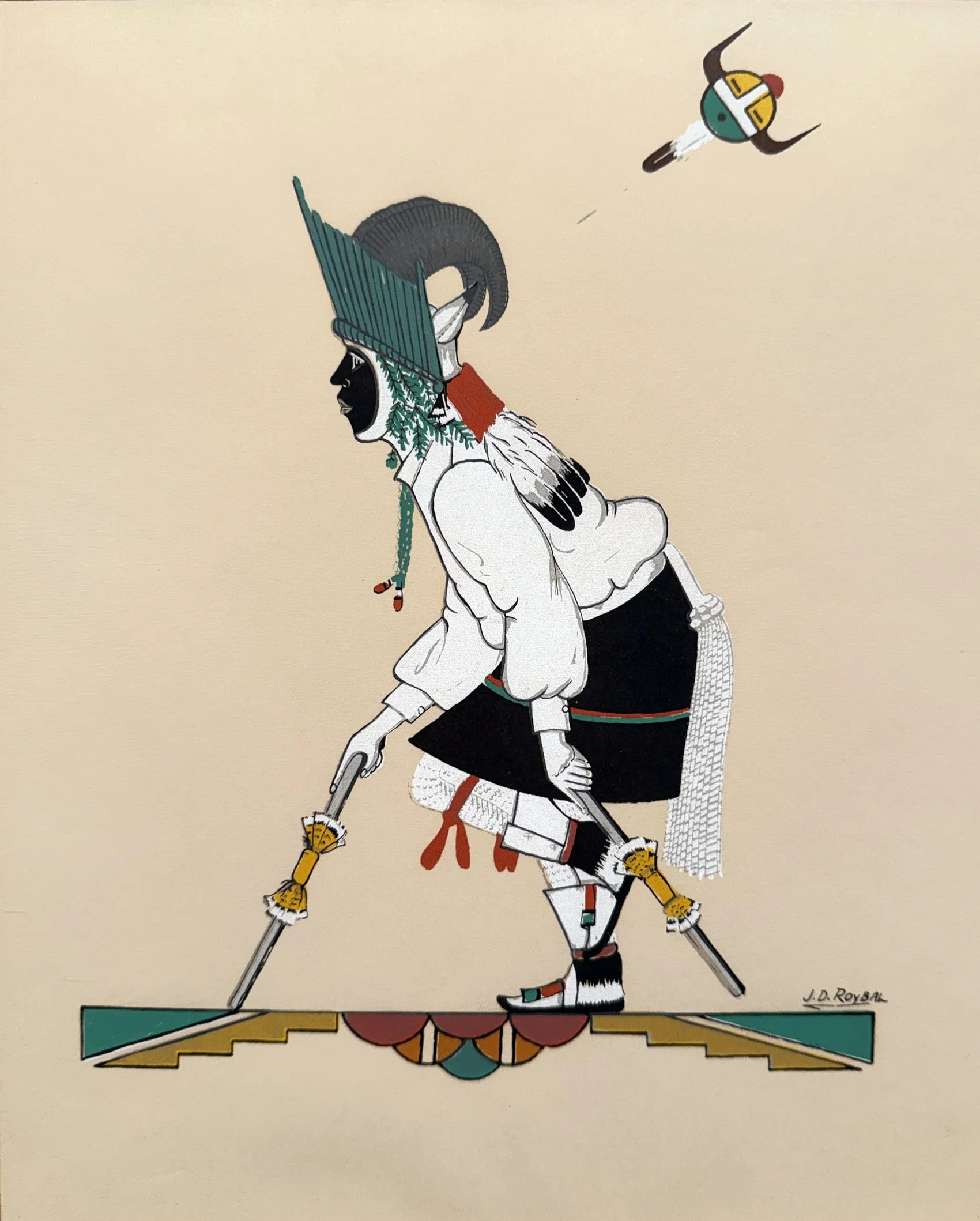
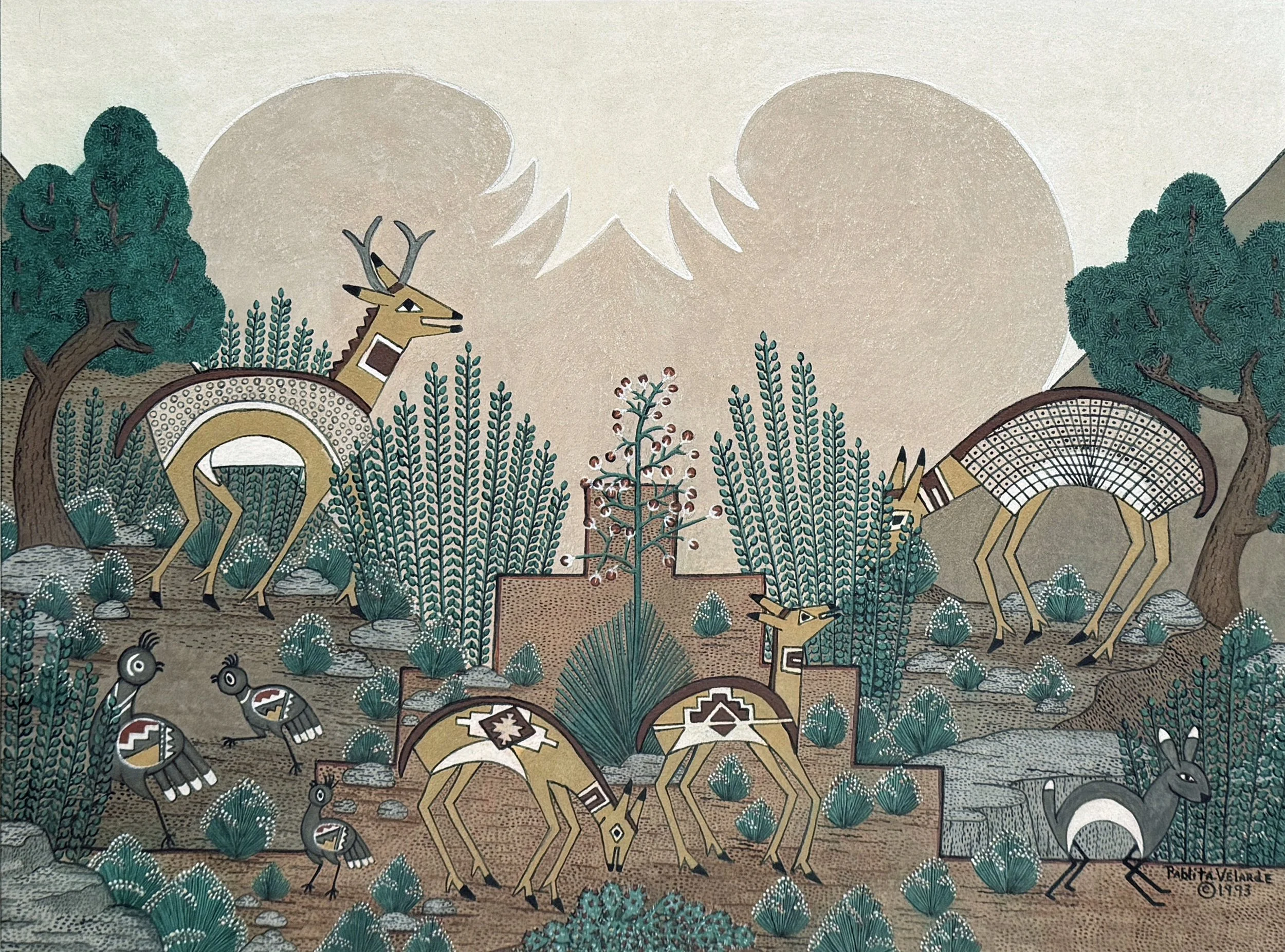
This exhibition titled Creative Forces of New Mexico aims to introduce the story of how the first Native American artists in the Southwest developed as professional artists, bringing attention to their cultures’ contribution to American art.
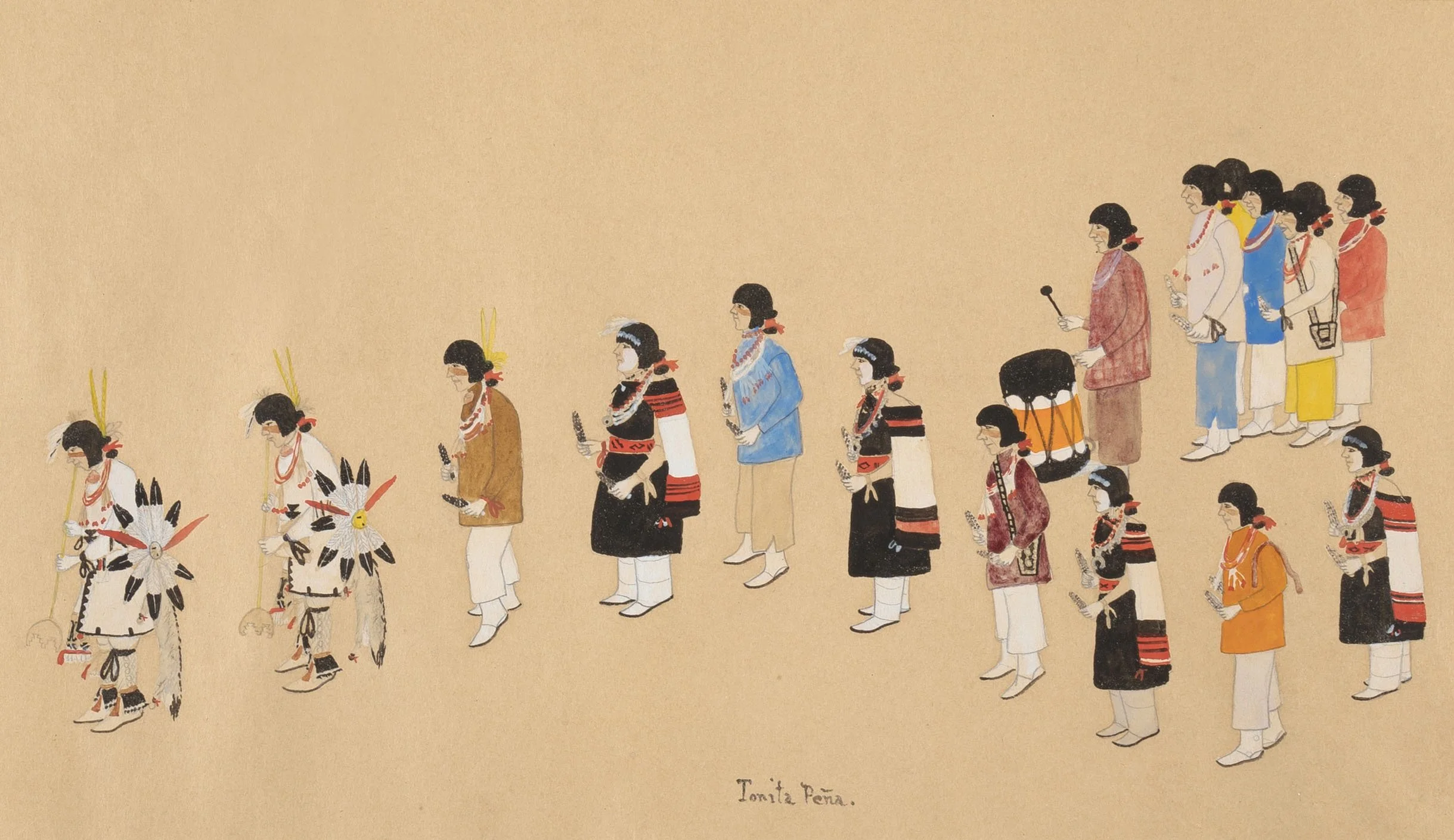
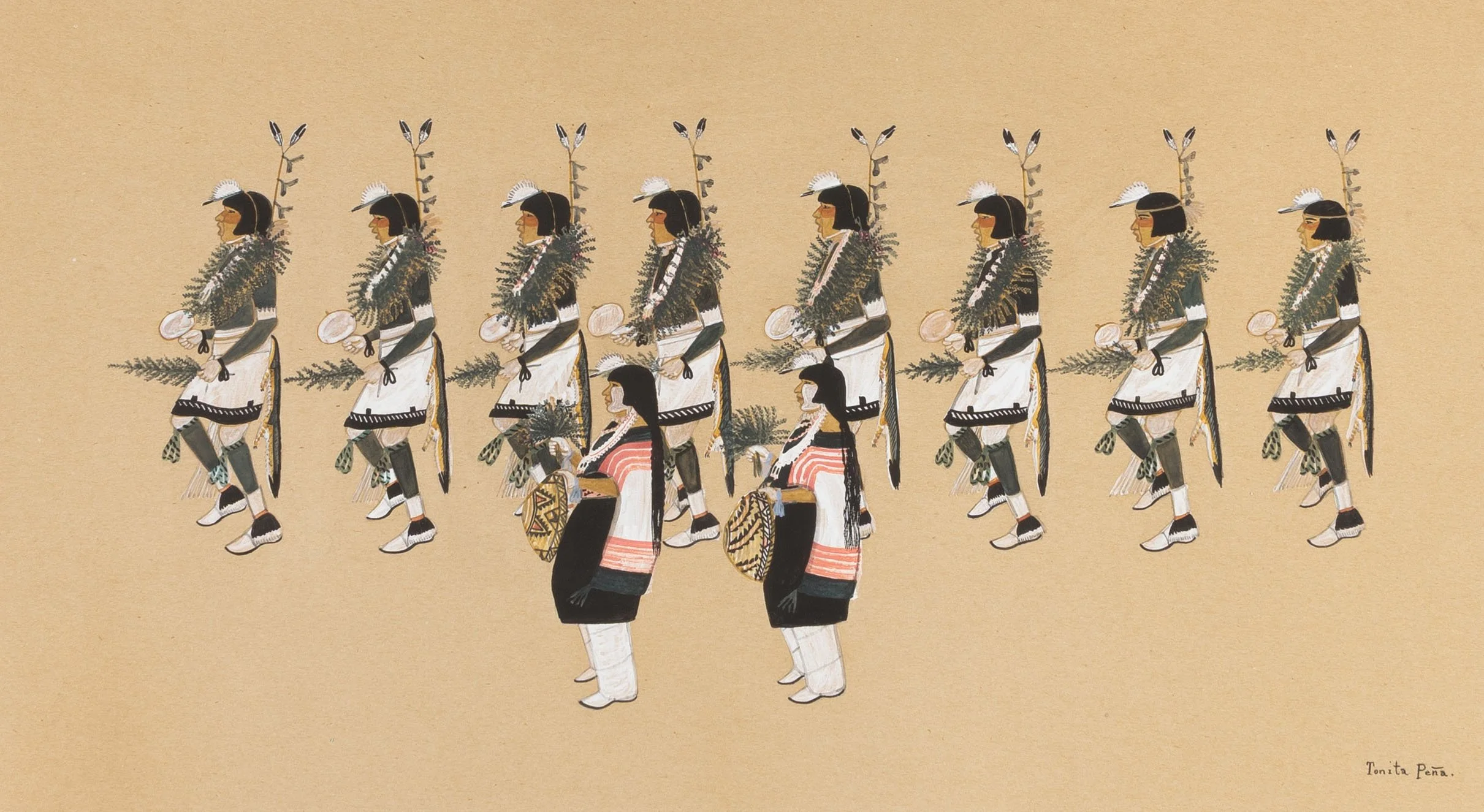
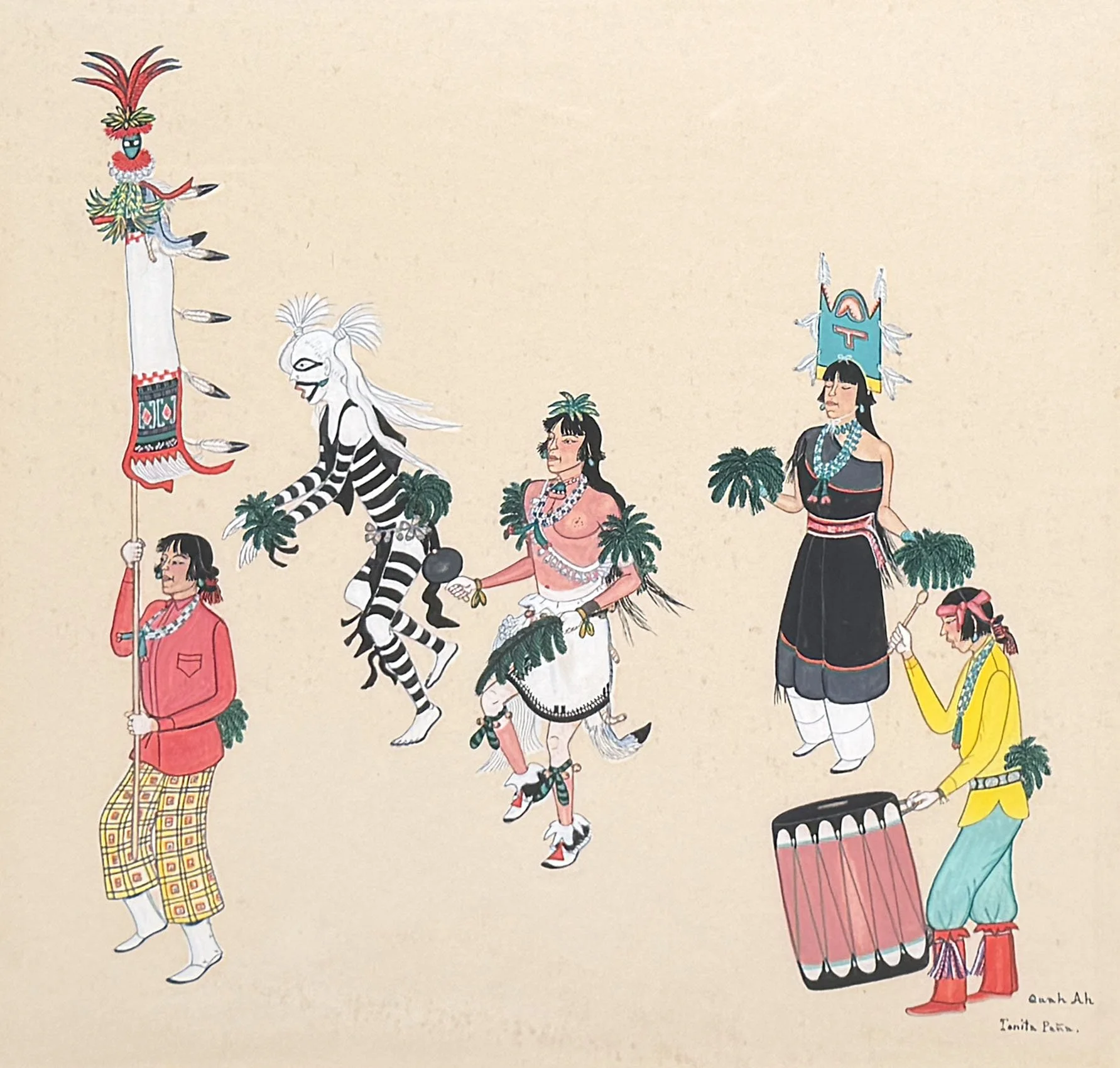
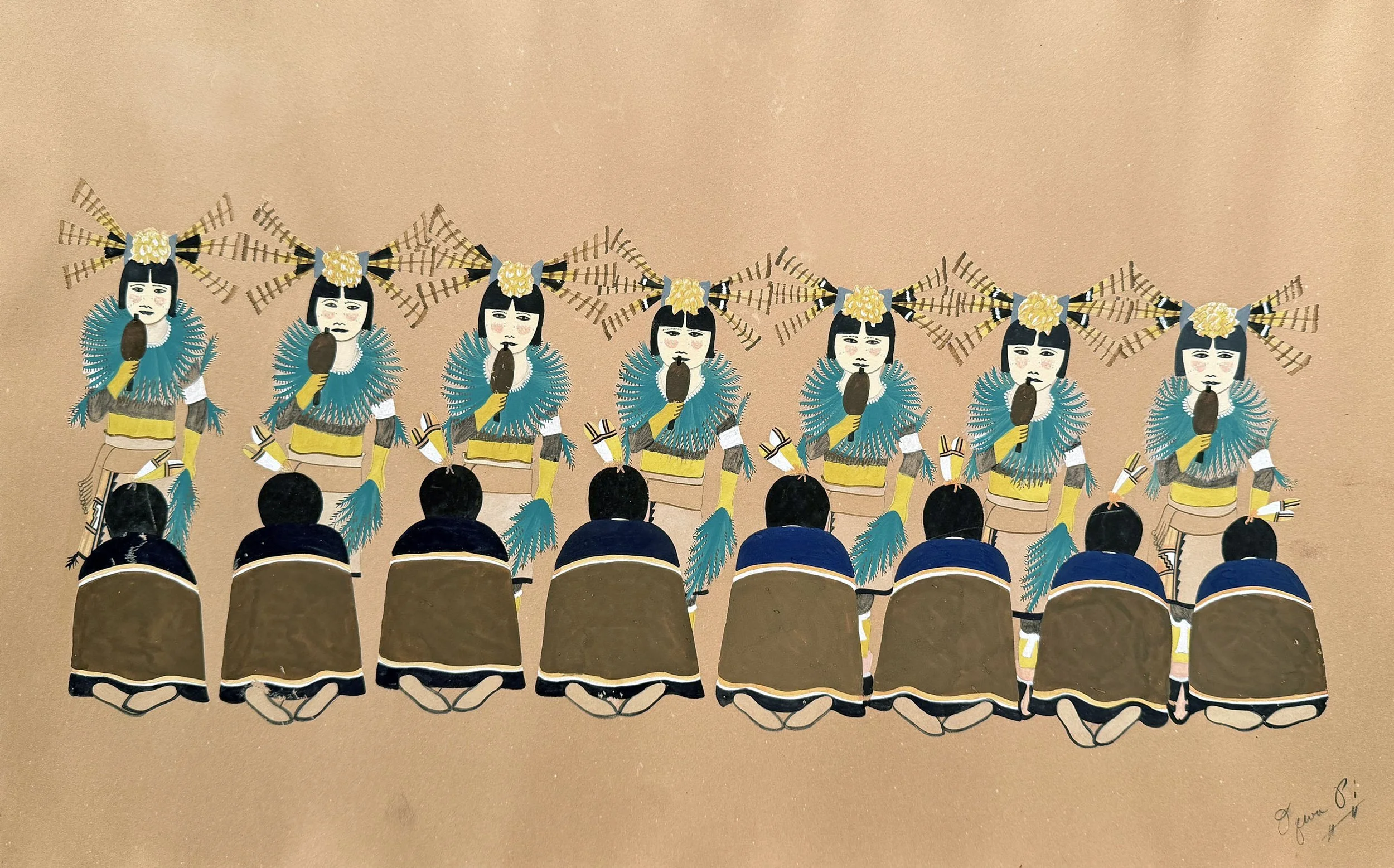
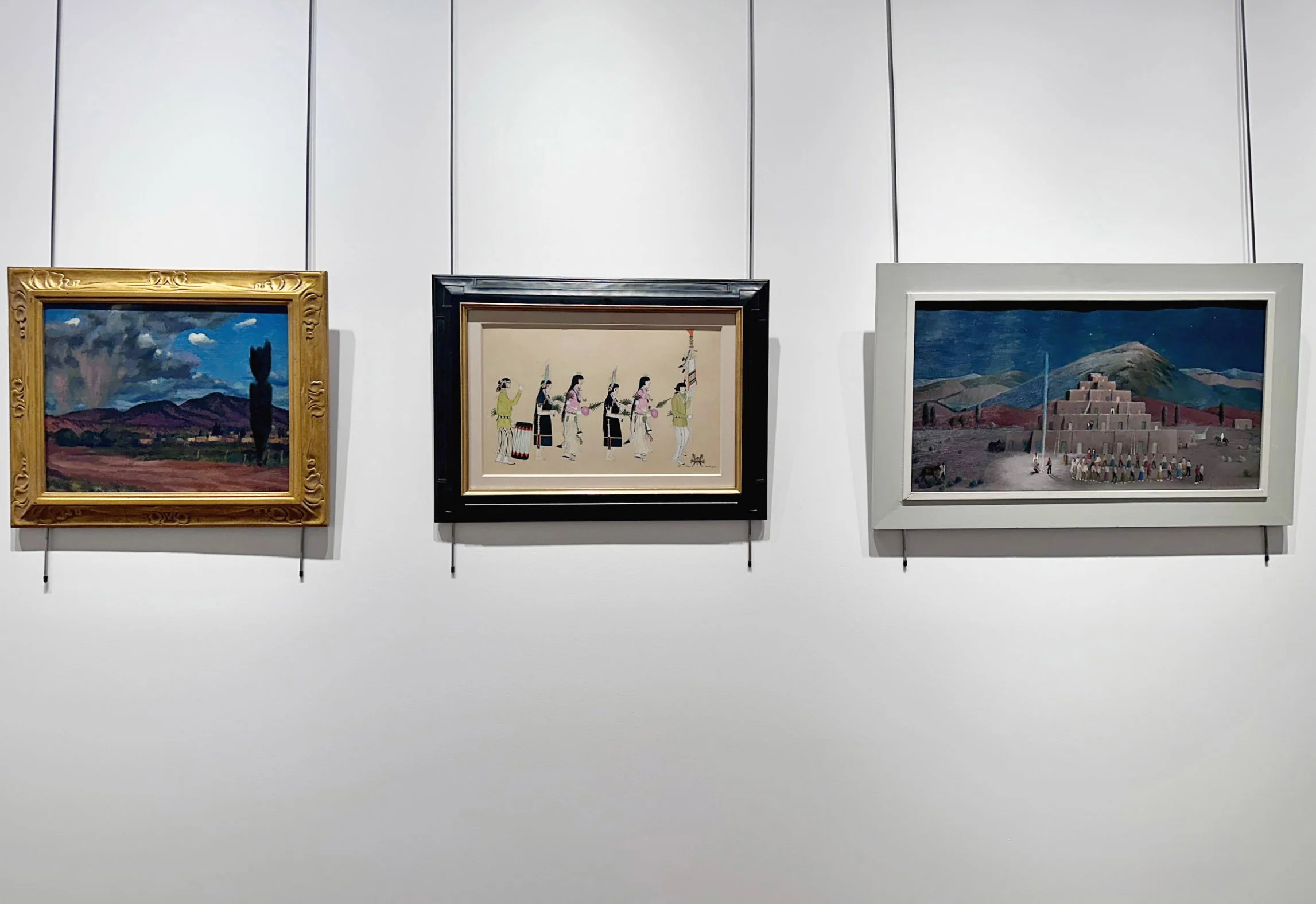
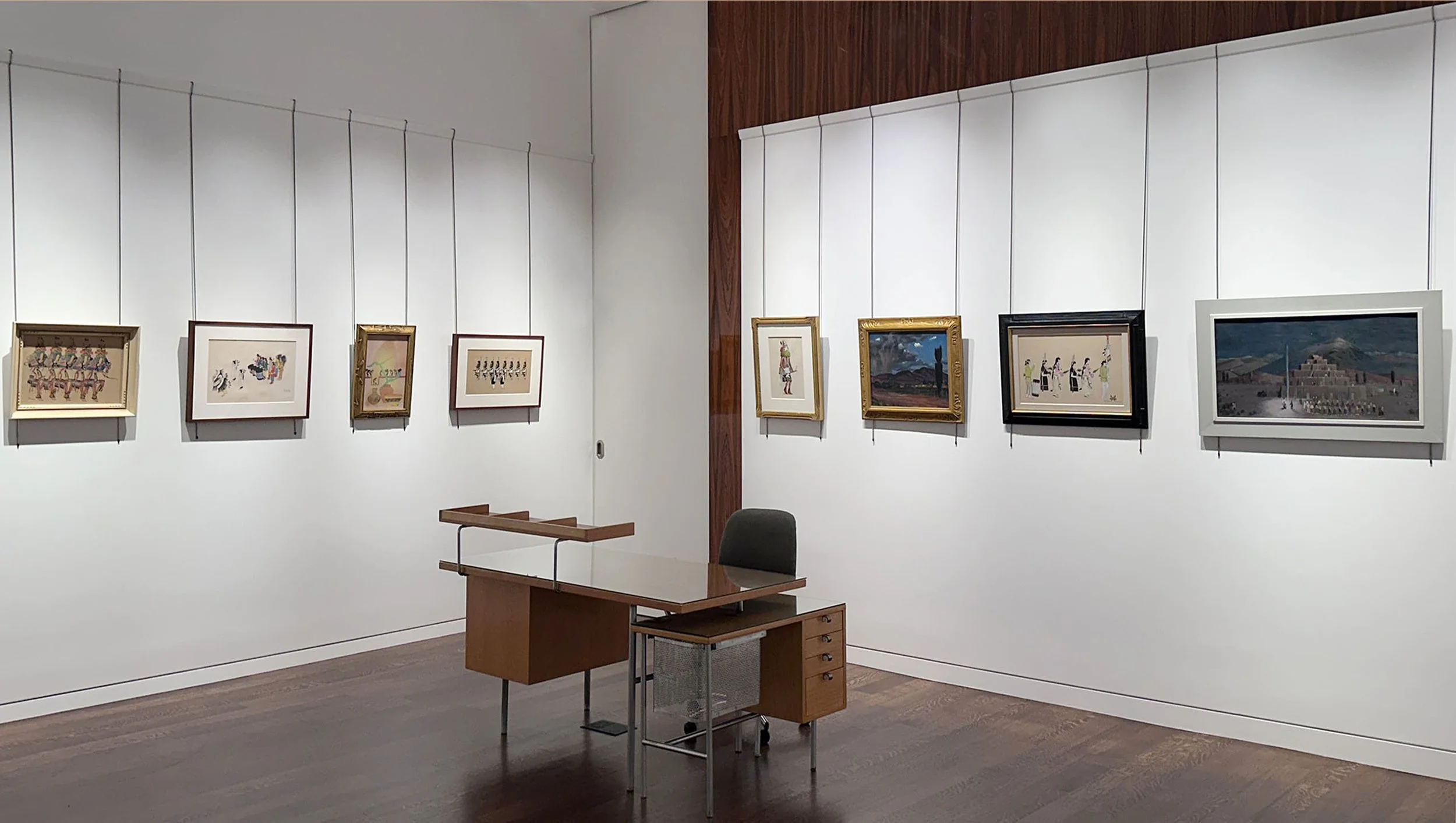
Our exhibition includes three generations of Native American artists centered around Santa Fe, starting in the Twenties. The first generation were self-taught and predominately from San Ildefonso Pueblo. They chose to paint in watercolor on paper scenes of ceremonial dances and Pueblo life in flat fields of color on bare backgrounds. The style came to be identified as the Pueblo Flat Style and is associated with Santa Fe, but it drew artists from the 19 villages along the Rio Grande where 5 different languages were spoken. The Pueblo Flat Style became associated with the Santa Fe Indian School which had students from across New Mexico and Arizona, so Diné and Hopi artists also painted in the Pueblo Flat Style. The artists choice to work in watercolor or gouache and ink on paper likely came from many of the artists having worked as draftsmen to record mural fragments found in local excavations. Two of the first artists, Crescencio Martinez (Táe, San Ildefonso Pueblo, 1879-1918) and Alfredo Montoya (Awa Tsireh, San Ildefonso Pueblo, 1890-1913), in the Teens realized that they could paint scenes in watercolor on paper to sell to a white audience. In their own culture, men painted on pots and made murals only. Edgar L. Hewett, head of the School of American Research and the new Museum of New Mexico, was an early customer, commissioning Martinez in 1918 to make a series of watercolors. Hewett then hired Martinez’s nephew Awa Tsireh (Alfonso Roybal, San Ildefonso Pueblo, 1898-1955) to illustrate Pueblo customs for the School of American Research, newly chartered to collect Indian materials. Studio space was provided for Awa Tsireh, Fred Kabotie (Hopi, 1900-1986), and Ma Pe Wi (Velino Herrera, Zia Pueblo, 1902-1973) in the Palace of Governors. These studios are likely where John Sloan, a New York artist, first met these painters in 1919.
Interest in Native American arts began in the late 19th century as an effort to record and preserve what was seen as a dying culture. The interaction between Native Americans and archaeologists brought into view that these cultures had artistic pasts and were responsive to new opportunities. The 1915 Panama-California Exposition in San Diego included an area dedicated to Southwestern Indian Culture, sponsored by the Santa Fe Railroad to promote tourism. It was organized by Edgar L. Hewett with artist Robert Henri as an advisor. Pueblo artisans from San Ildefonso built the exhibition on site and brought handmade arts and crafts to show how they integrated into domestic life. The admiration by visitors to the exposition created a revival of contemporary arts and crafts. The Panama-California Exposition made Native Americans aware that traditional crafts of quality and authenticity could be developed into a cash economy to support their communities and preserve indigenous skills and culture. Soon yearly art fairs for Native Arts developed in Santa Fe, Gallup, and Western Oklahoma.
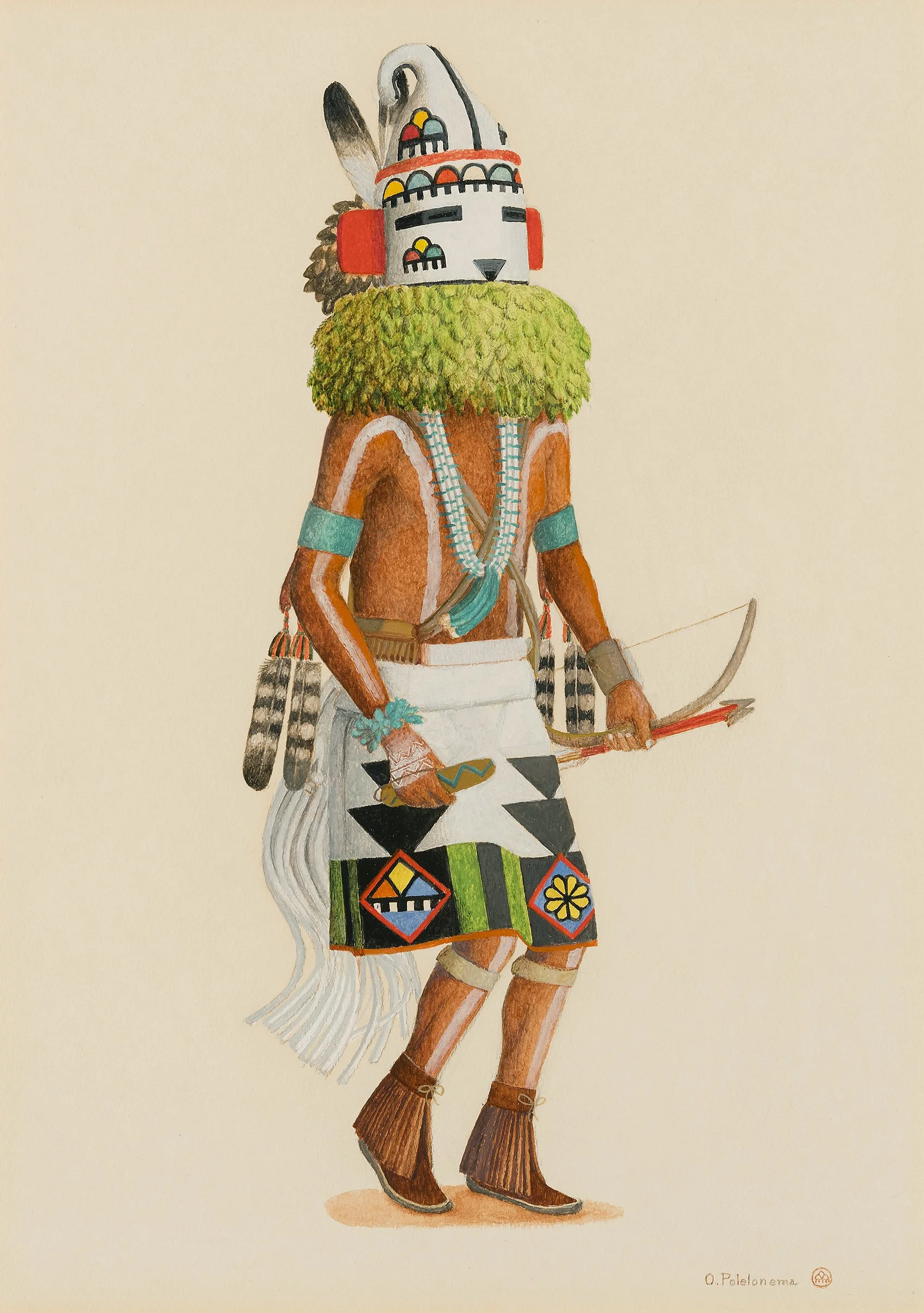
As Native American art was becoming a symbol of America’s unique cultural mix, artists from Southwestern tribes was selected to represent America in two major international exhibitions: the 1928 International Congress of Folk Art in Prague and the 1929 Ibero-American Exposition in Seville . The artists Ma Pe Wi, Tonita Peña (Quah Ah, San Ildefonso / Cochiti Pueblo, 1893-1949), Otis Polelonema (Hopi, 1902-1981), and Romando Vigil (Tse Ye Mu, San Ildefonso Pueblo, 1902-1978) in our exhibition had works shown at the American Pavilion at the Venice Biennale in 1932. The destruction of World War I created a critique of European values in America, which led people to look to Native American culture as a source of American identity. Native American objects began to be viewed differently; now as a symbolic decorative art shaped by an American environment that expressed unity rather than cultural tension. The rural simplicity of the Pueblo versus urban complexity and the Pueblo peoples’ emphasis on community interests over those of the individual were seen as valuable. Another attractive aspect of Pueblo culture shown in its art was the balance and reciprocity between humans, animals, and nature.
The development of the Pueblo artists includes the help and interaction of established artists who traveled to New Mexico to develop their own new art. These artists are grouped into two stylistic generations. Those in the first group are the Traditionalists starting in the late 1890s who formed the Taos Society of Artists in 1915: E. Martin Hennings, Victor Higgins, Ernest Blumenschein, Joseph Sharp, Walter Ufer, E. Irving Couse, Bert Phillips, and Gerald Cassidy. The second group are the Modernists, many of whom arrived from 1912 into the early 1930s: Andrew Dasburg, B.J.O. Nordfeldt, John Sloan, Emil Bisttram, Jan Matulka, John Marin, Gustave Baumann, Howard Cook, Marsden Hartley, Joseph Bakos, Georgia O’Keeffe, Raymond Jonson, Stuart Davis, Leon Kroll, and Gina Knee.
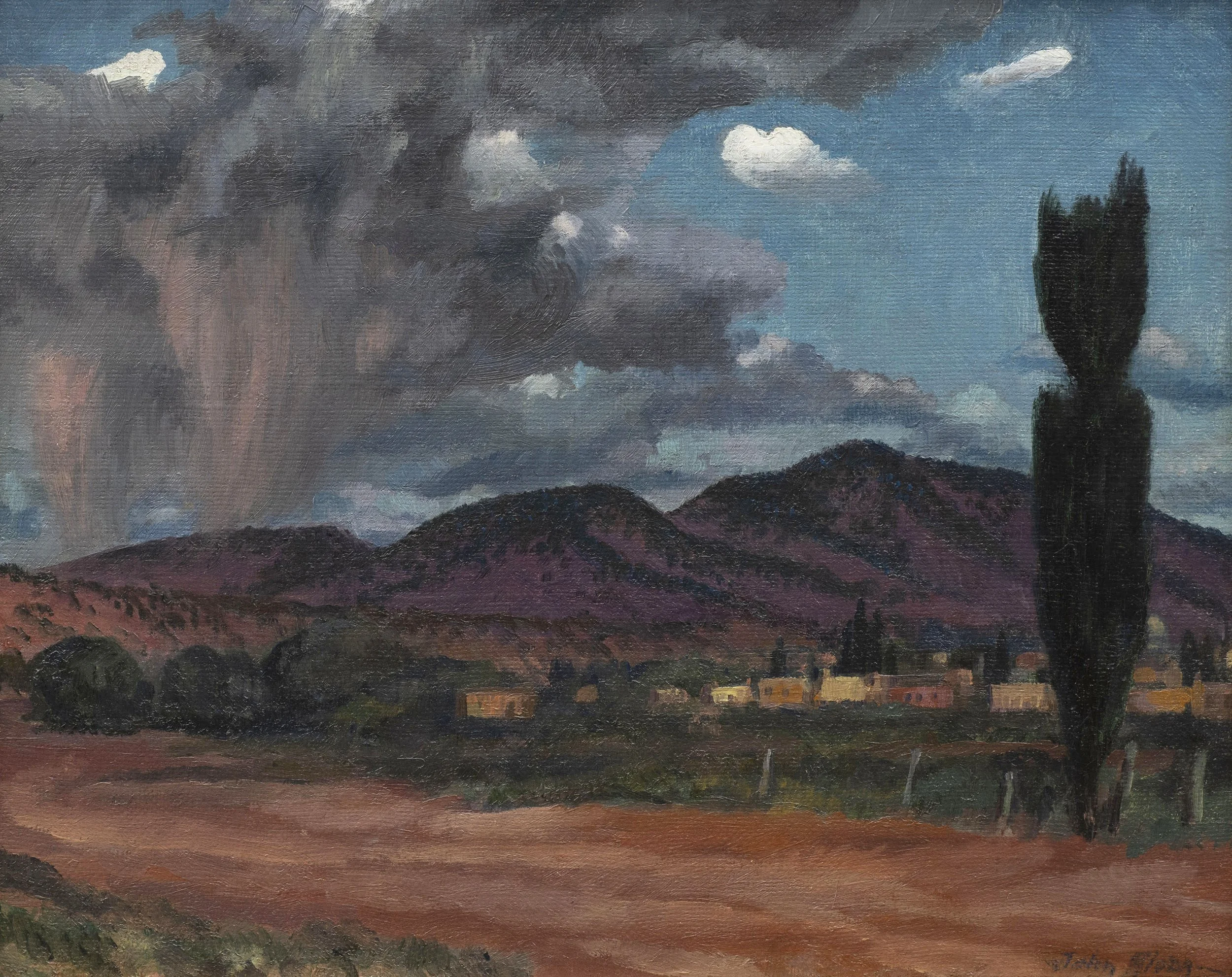
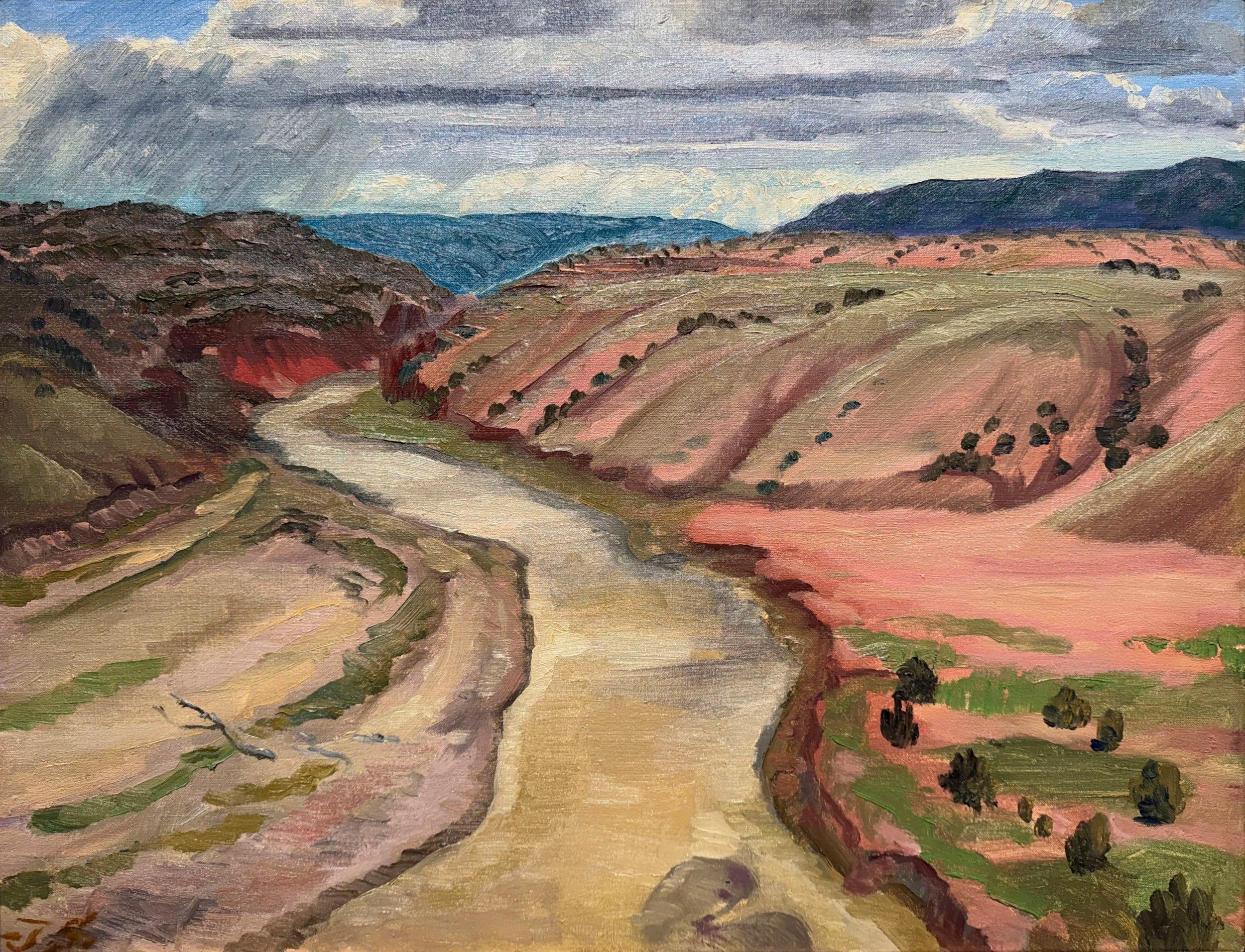
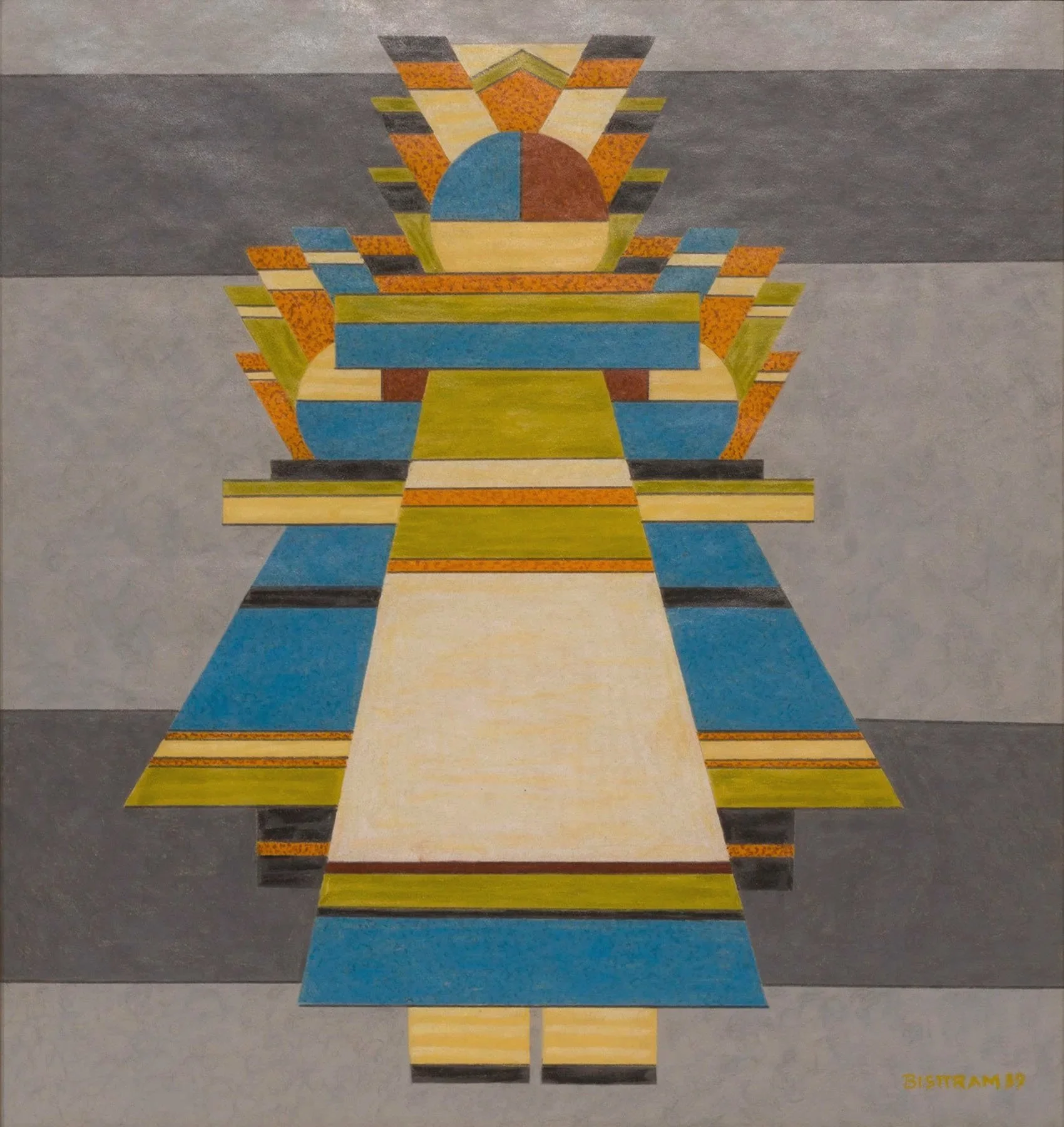
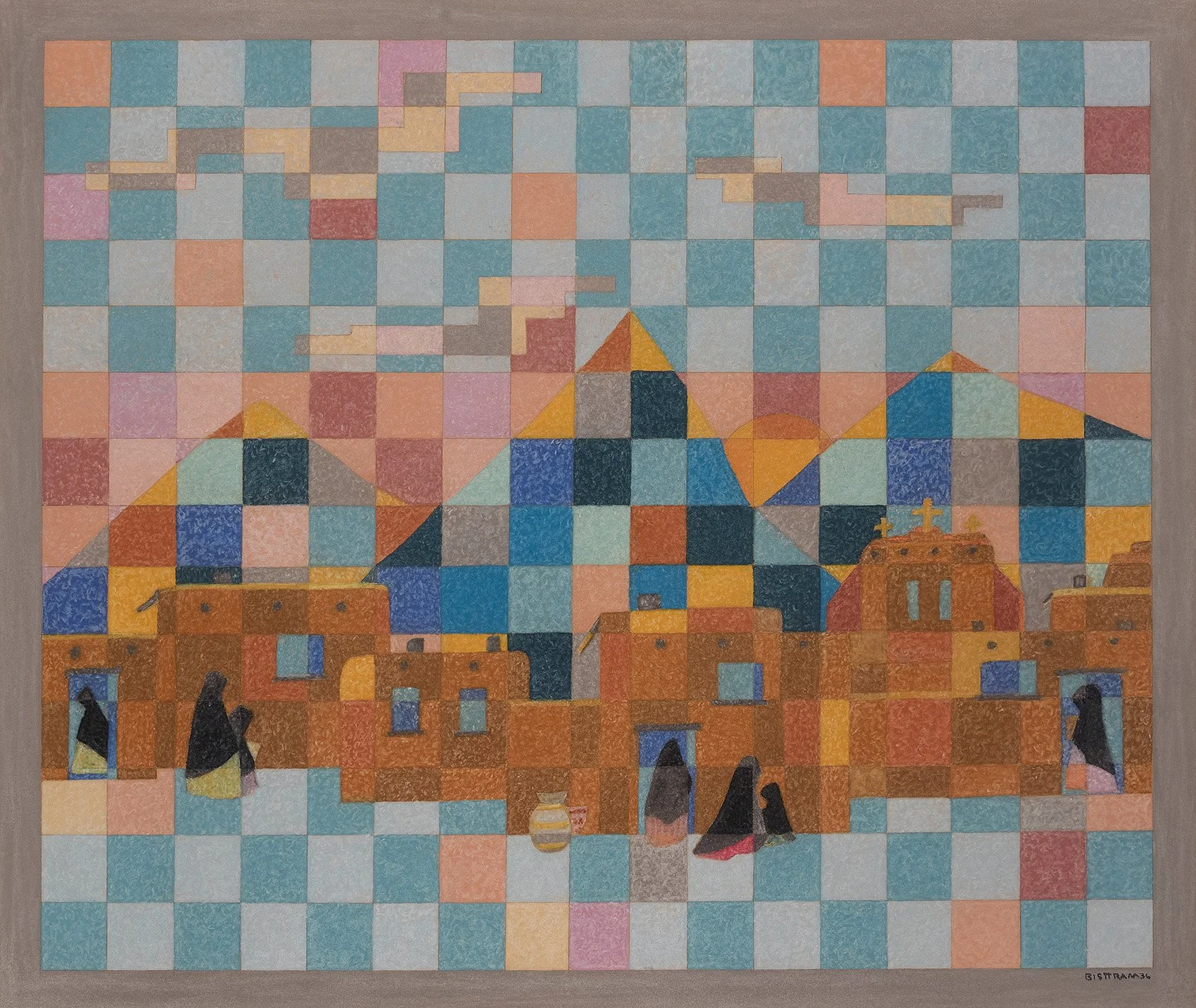
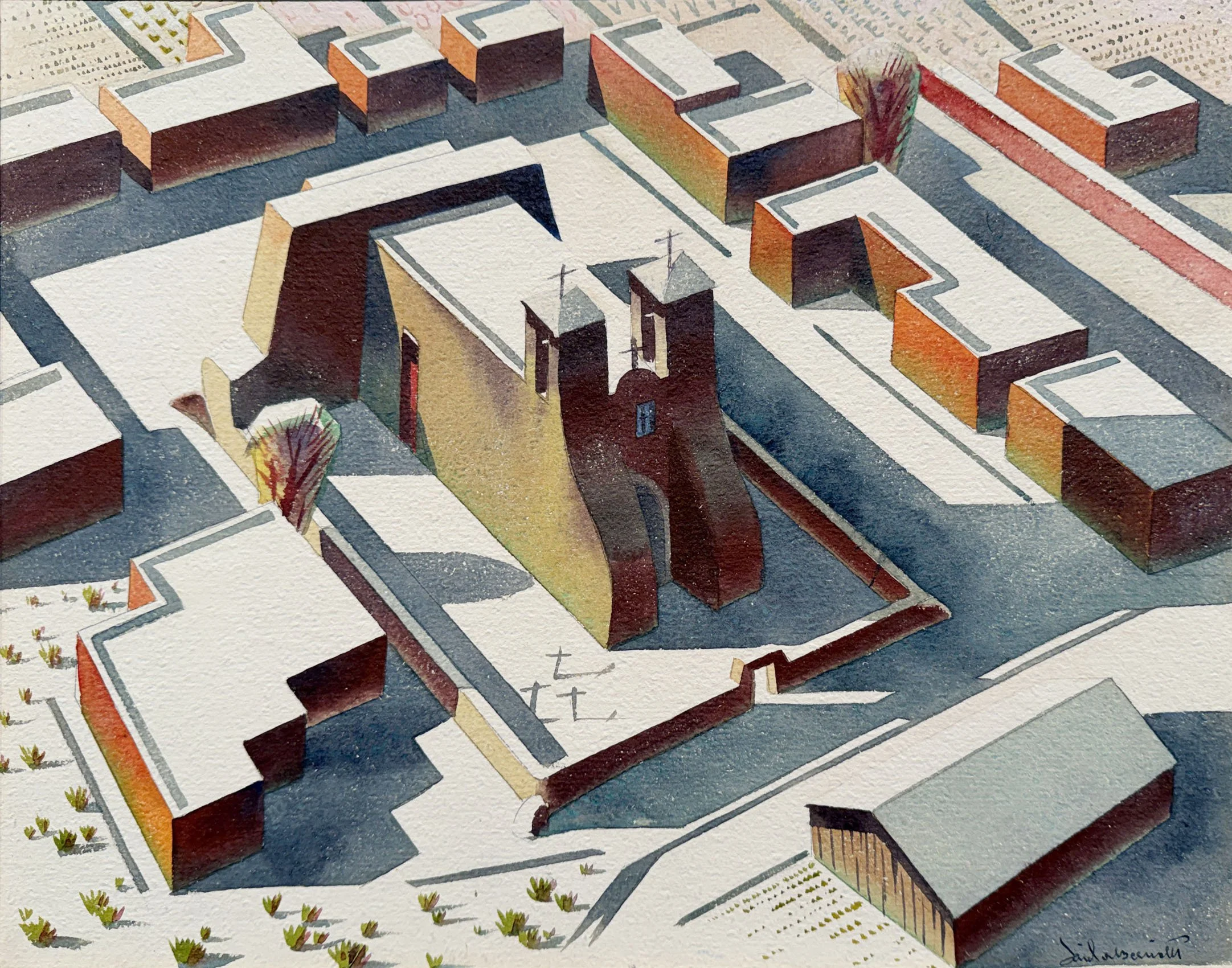
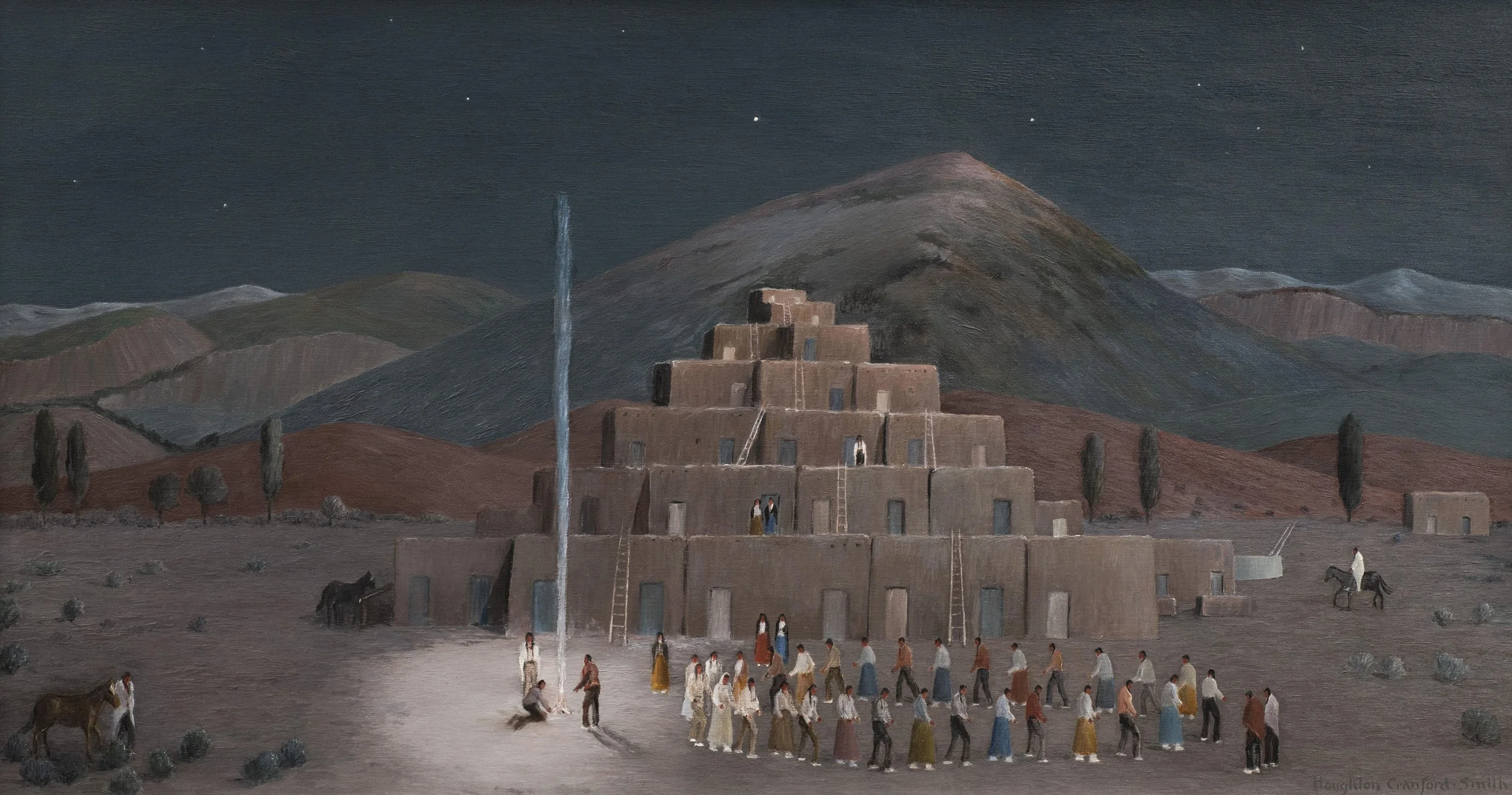
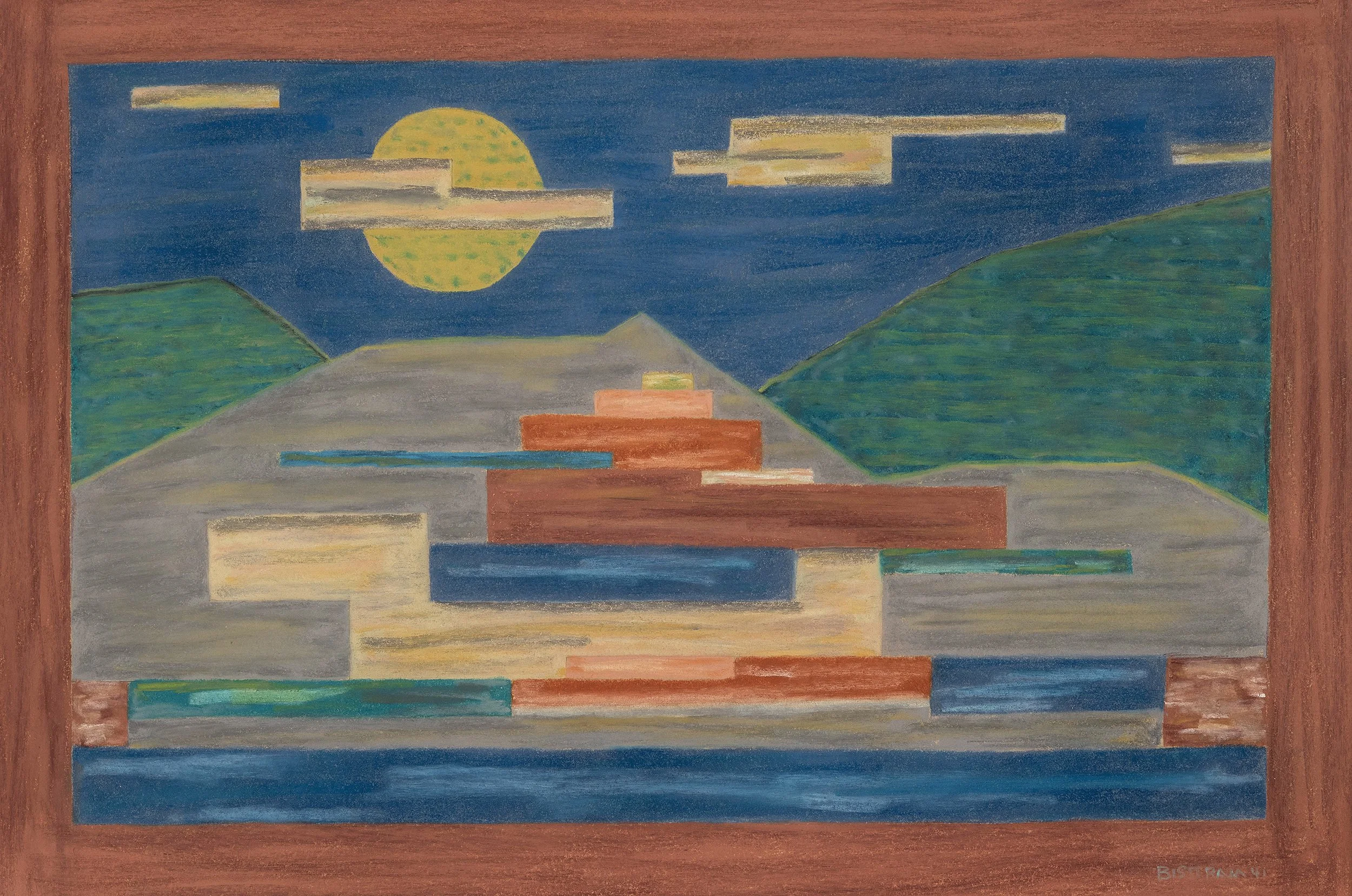
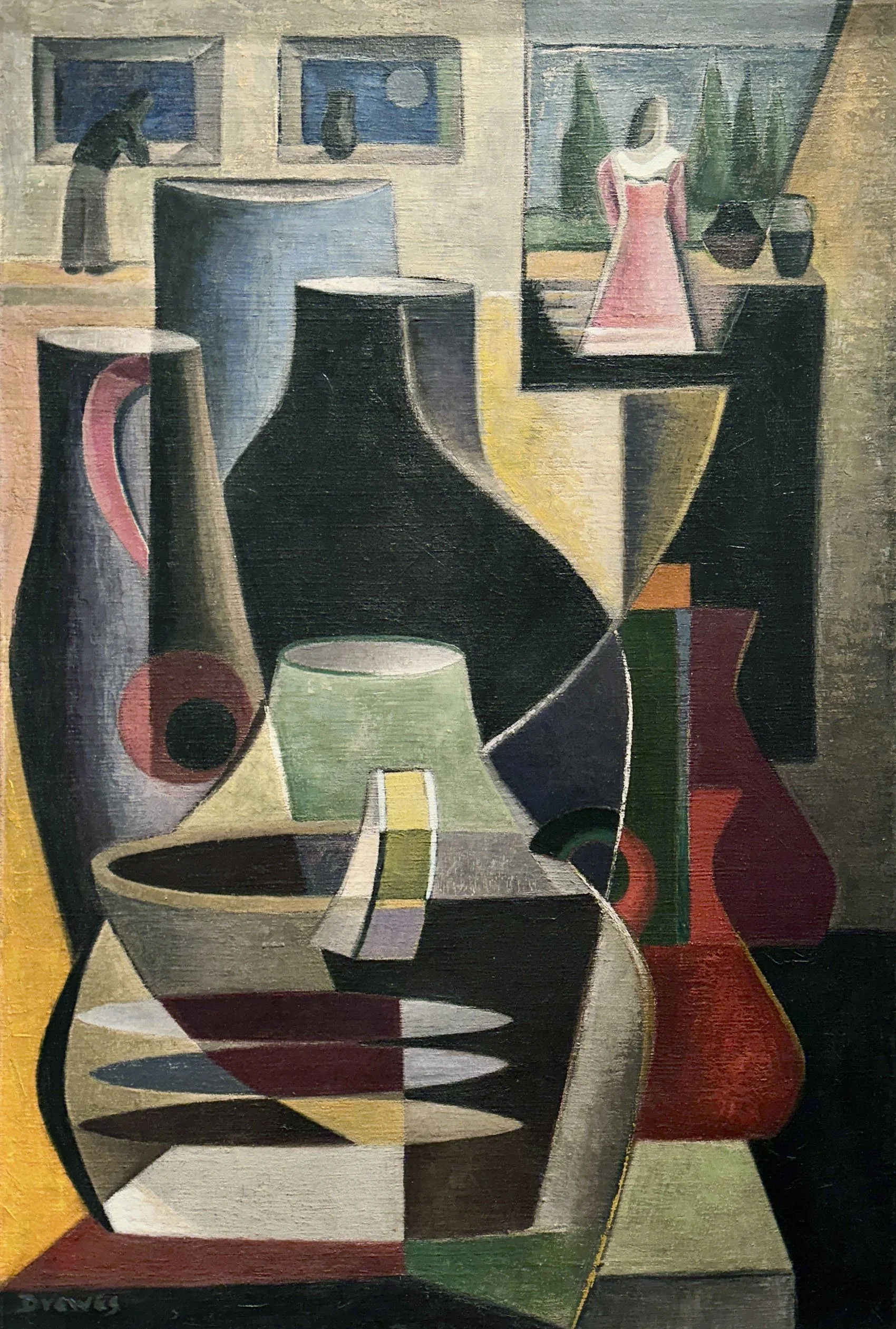
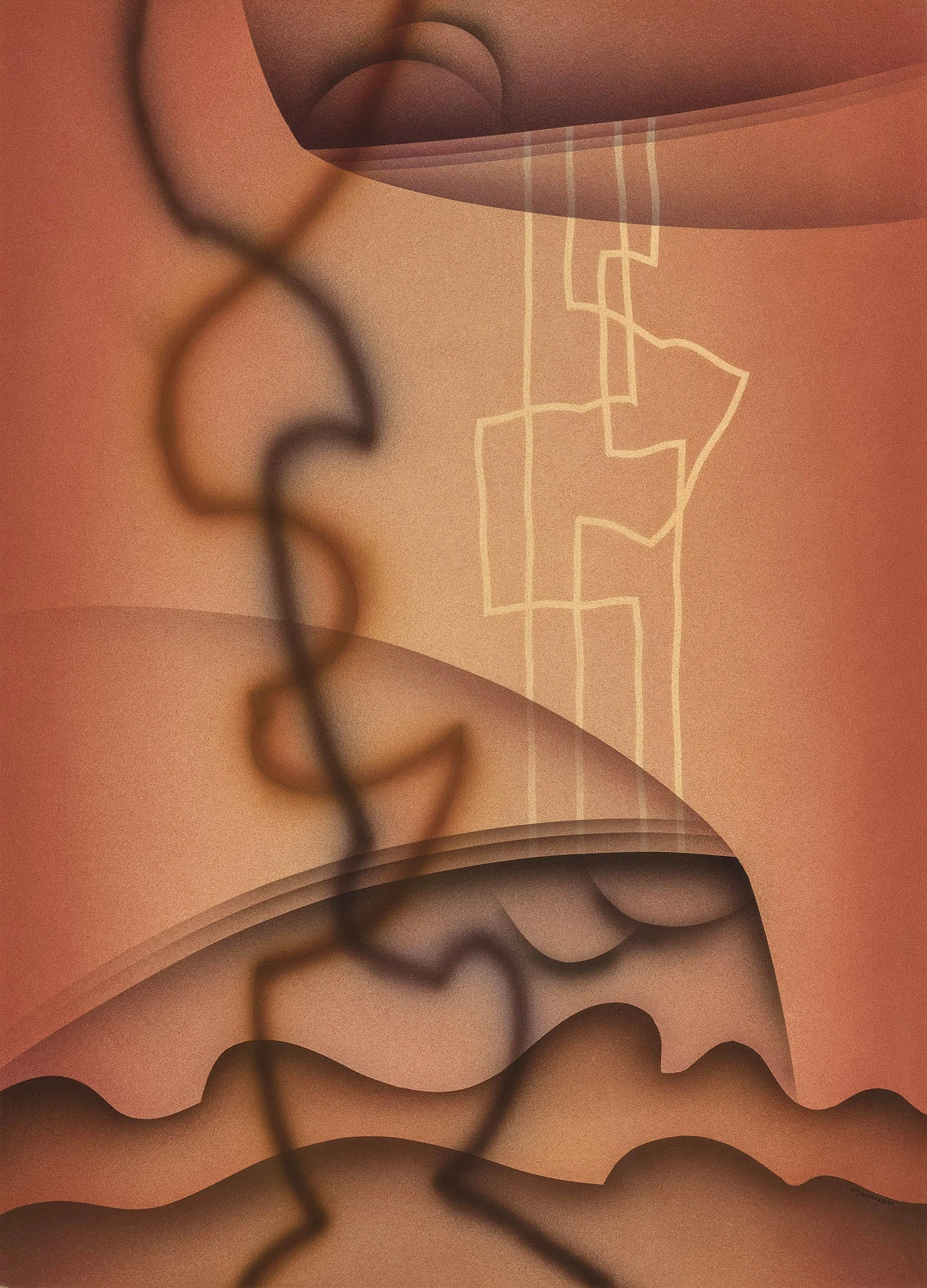
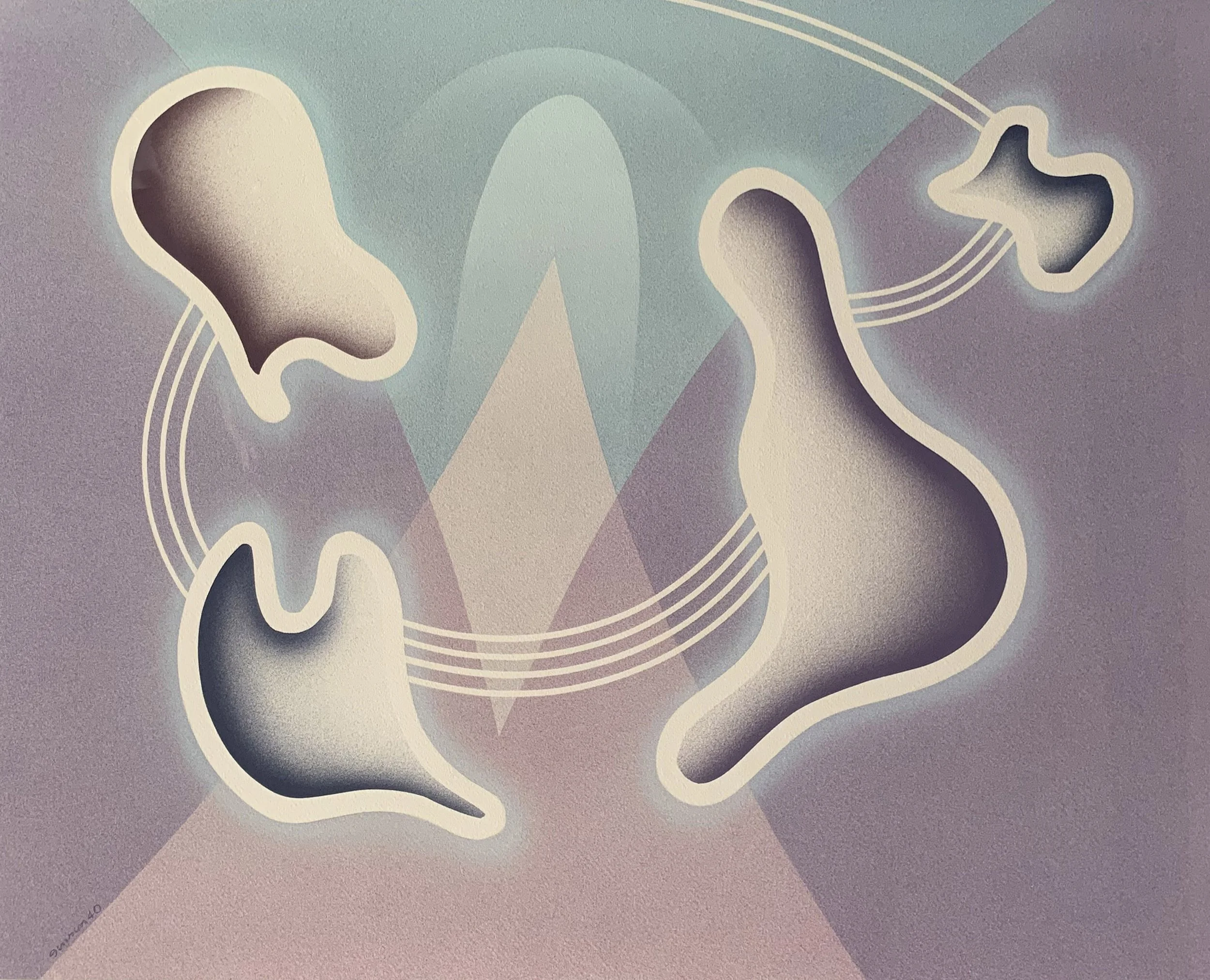
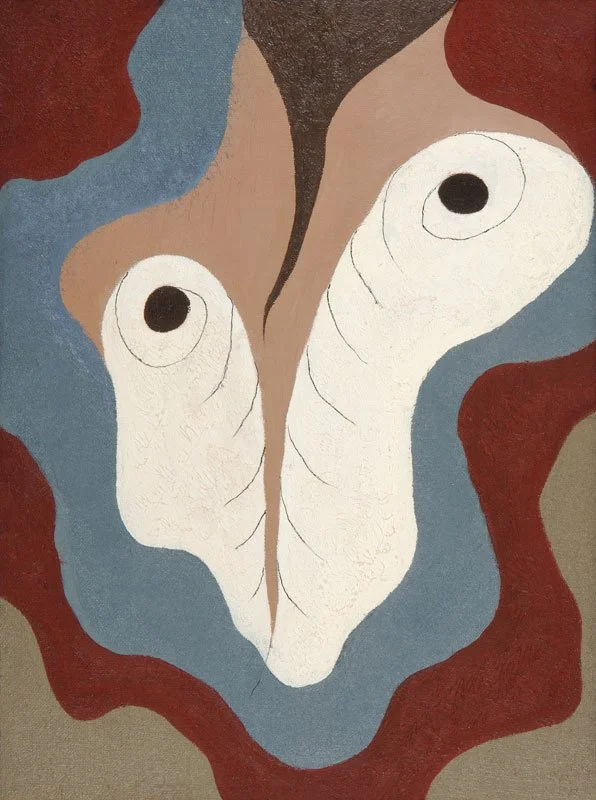
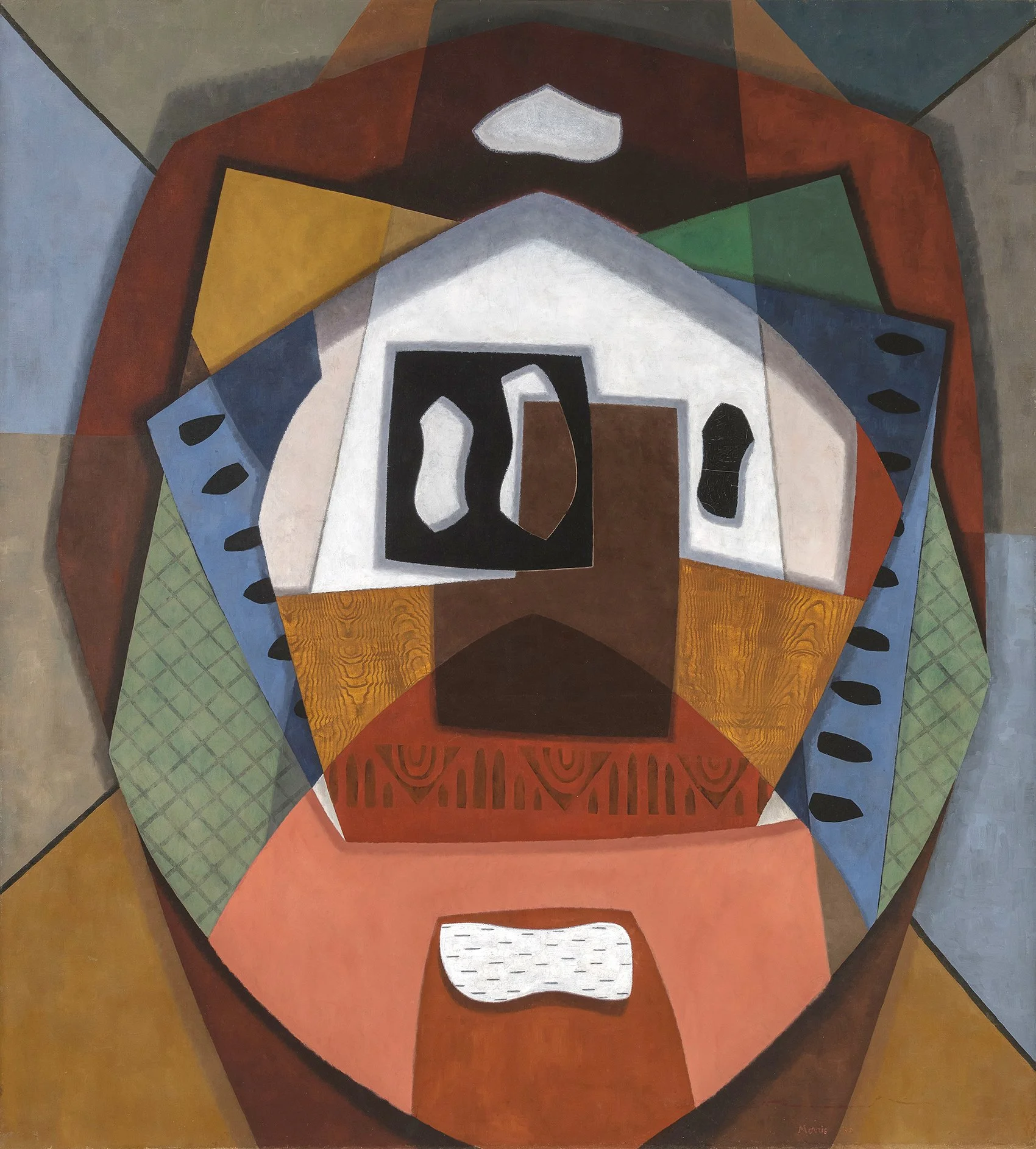
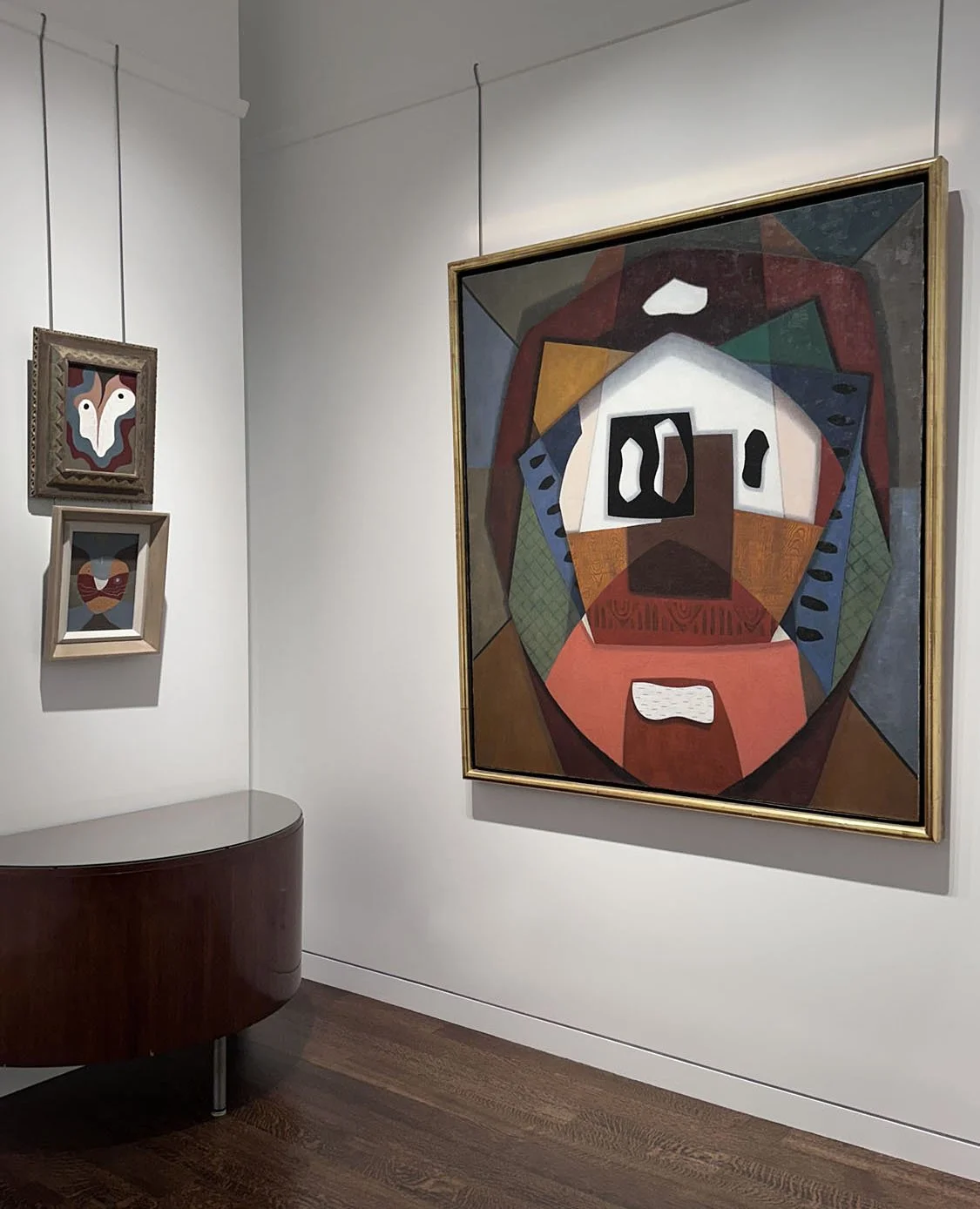
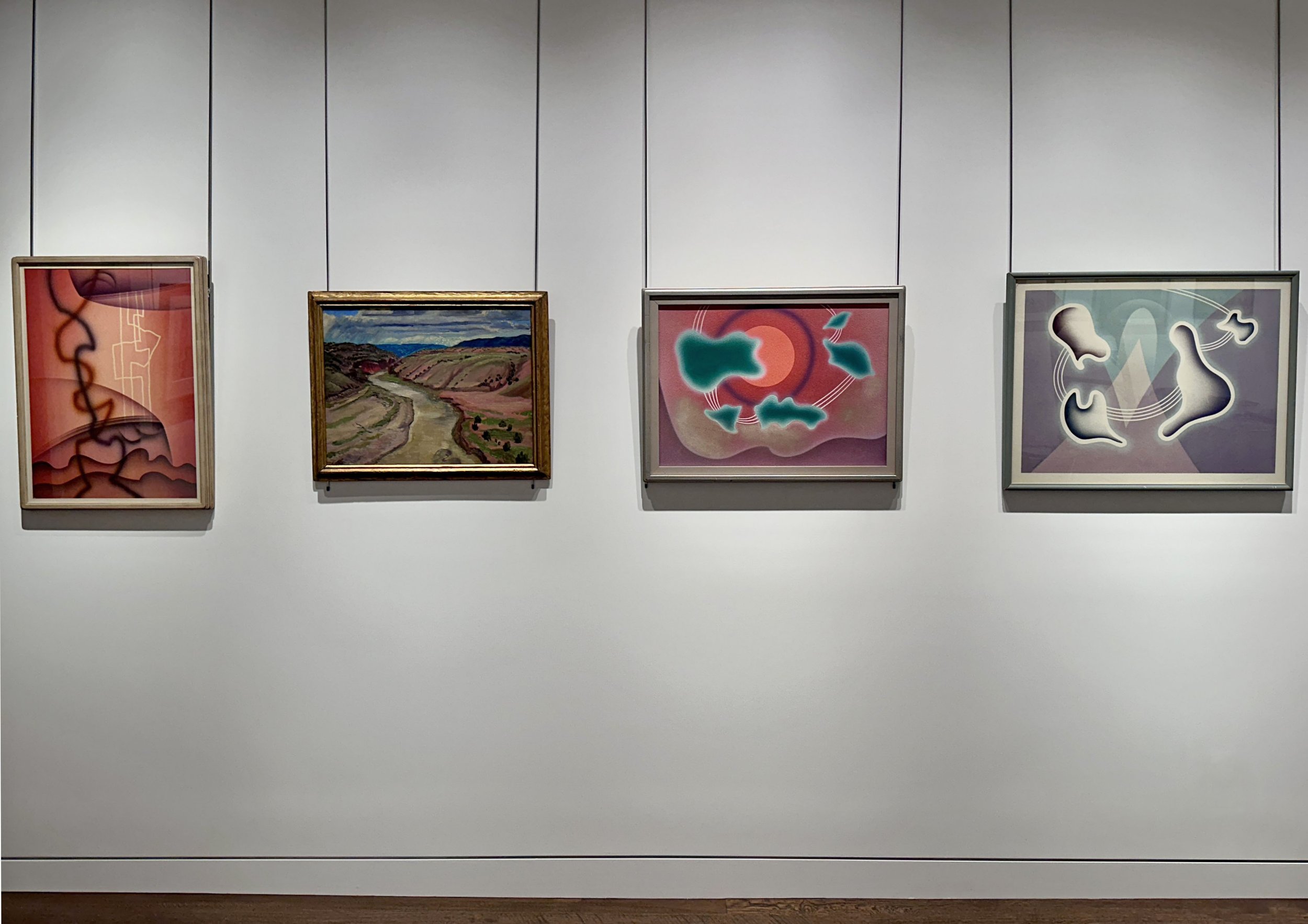
Amongst these Modernists, the gallery has selected three as a focus: John Sloan (1871-1951), Raymond Jonson (1891-1982), and Emil Bisttram (1895-1976). Each of these artists became a resident of New Mexico and used references to Native cultures to advance their own art. In addition to the art reflecting New Mexico by Sloan, Jonson, and Bisttram, we have added a few works of particular interest by artists who visited New Mexico: Sandor Bernath (1892-1984), Werner Drewes (1895-1985), George L.K. Morris (1905-1975), Charles Green Shaw (1892-1974), and Houghton Cranford Smith (1887-1983).

Pueblo Painters exhibited at the American Pavilion, Venice Biennale, 1932
John Sloan arrived in Santa Fe the summer of 1919 and the following year bought property and become a yearly summer resident. Sloan was famous for painting the new urban life of New York city as a melting pot. He was a founding member of the Whitney Studio Club, taught at the Art Students League, and was President of the Society of Independent Artists from its founding in 1916 until 1943. As an advocate for Native American art, John Sloan brought the Pueblo people to the attention of New York’s artists, collectors, dealers, and museum scholars through his paintings of the people, landscape, and customs of New Mexico. Starting in 1920, Sloan included a group of paintings by Pueblo artists in the annuals of the Society of Independent Artists, where their work hung alongside the members’ paintings. This created press coverage and gained credibility for the Pueblo painters as artists. Sloan followed up with a larger exhibition of Pueblo watercolors at the Society of Independent Artists in 1922. The native artists included were: Awa Tsireh (Alfonso Roybal), Fred Kabotie, Harrison Begay, as well as artists we were able to obtain for our exhibition: Ma Pe Wi, Oqwa Pi (Abel Sanchez, San Ildefonso Pueblo, 1899-1971), Otis Polelonema, and Tonita Peña. One of the Awa Tsireh paintings loaned to the 1922 exhibition belonged to Mabel Dodge Luhan. Three exhibitions of Pueblo painters were held at the Ferargil Galleries in 1926 and 1927.
Museums also started exhibiting Native American paintings. In Santa Fe, the Museum of New Mexico presented its first exhibition of professional Pueblo artists in 1919, featuring Ma Pe Wi, Fred Kabotie, and Otis Polelonema. The Brooklyn Museum had numerous exhibitions on Pueblo artists including Pueblo & Kiowa Drawings from the Southwest in 1930 and The Studio: U.S. Indian School, Santa Fe, New Mexico – an exhibition of more than 100 paintings by present students of the Studio at the Santa Fe Indian School – in 1936.
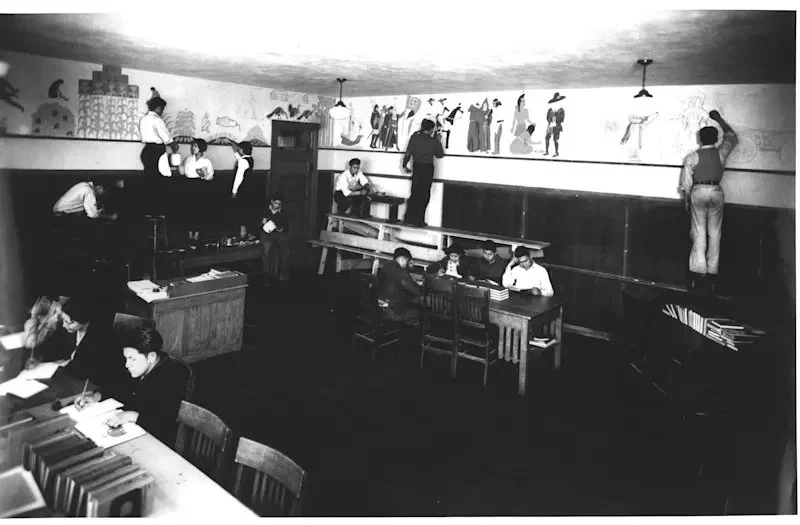
Mural painting at the Santa Fe Indian School in the 1930s
By the 1930s the second generation of Pueblo artists benefited training in technique and design gained at the Santa Fe Indian School’s Studio, which opened in 1932, with a curriculum developed by Dorothy Dunn. The Santa Fe Indian School drew students from New Mexico and Northern Arizona. Both Pablita Velarde (Tse Tsan, Santa Clara Pueblo, 1918-2006) and Quincy Tahoma (Diné, 1920-1956), represented in our exhibition, took classes there in the 1930s. Additional places of art training for native Americans developed over time such as Bacone College in eastern Oklahoma, The Institute of American Indian Arts, and the University of Oklahoma in the 1920s with an addition of a graduate arts program for native American in 1932.
In New York a major exhibition, Exposition of Indian Tribal Arts, was held at the Grand Central Art Galleries. Studio paintings were shown alongside historical and ancestral art. The organizers wanted to show that Indian culture remained vital. The exposition opened in December of 1931 and was so well received it traveled through the U.S. for two years arranged by the College Art Association. In January it traveled to the Corcoran Museum in Washington, DC and ended at the Saint Louis Art Museum in December that year.
The new attitude about Native arts reached the federal level when in 1933 President Franklin D. Roosevelt created a New Deal Indian Arts and Craft Board, and the following year the Indian Reorganization Act. After a study at the time proposed Mexico’s modernization was stimulated by the incorporation of pre-Columbian design, the Museum of Modern Art began organizing their own exhibition on historic Native American arts. The resulting 1941 exhibition Indian Art of the United States marked the culmination of the journey for American native arts to be accepted as of national importance.
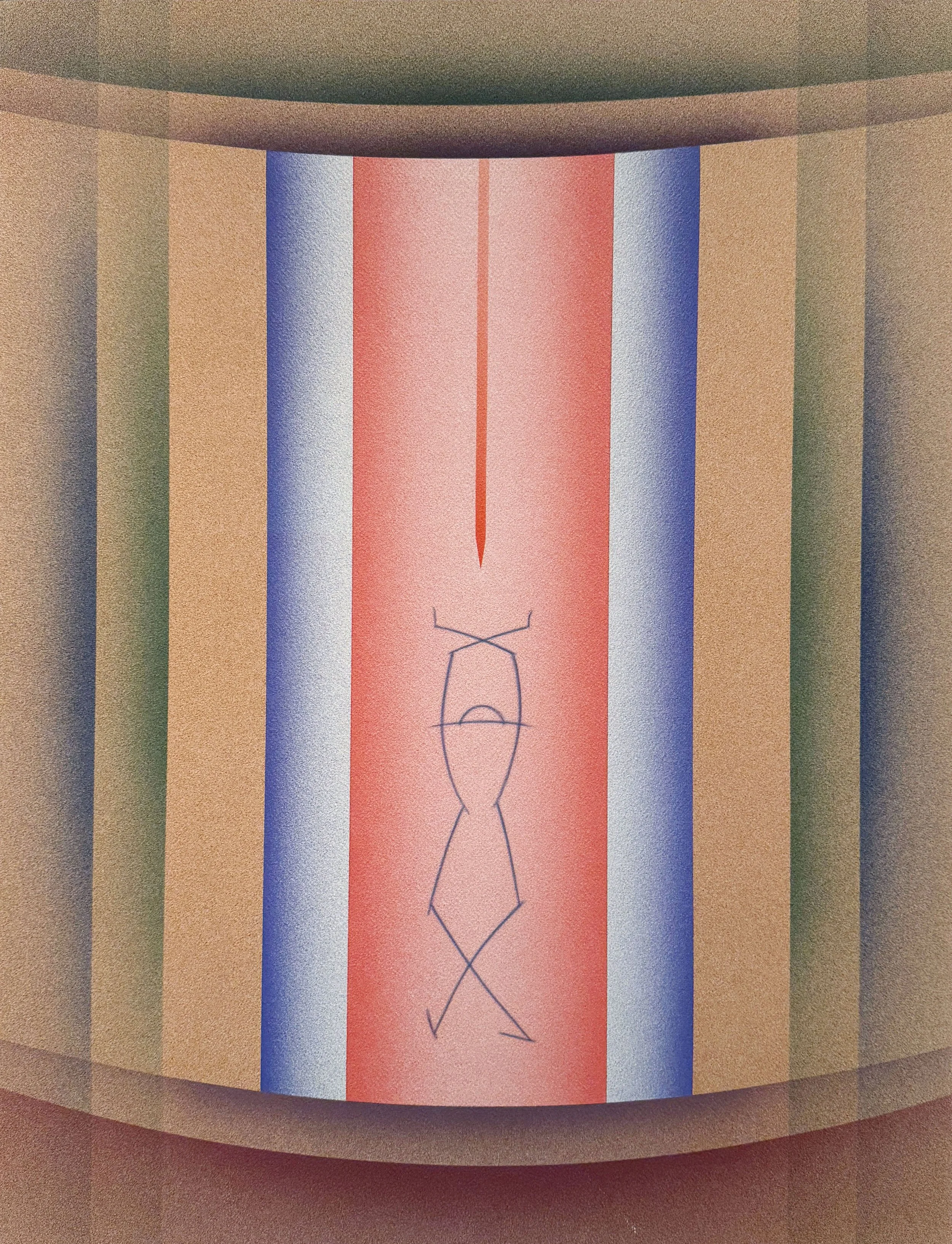
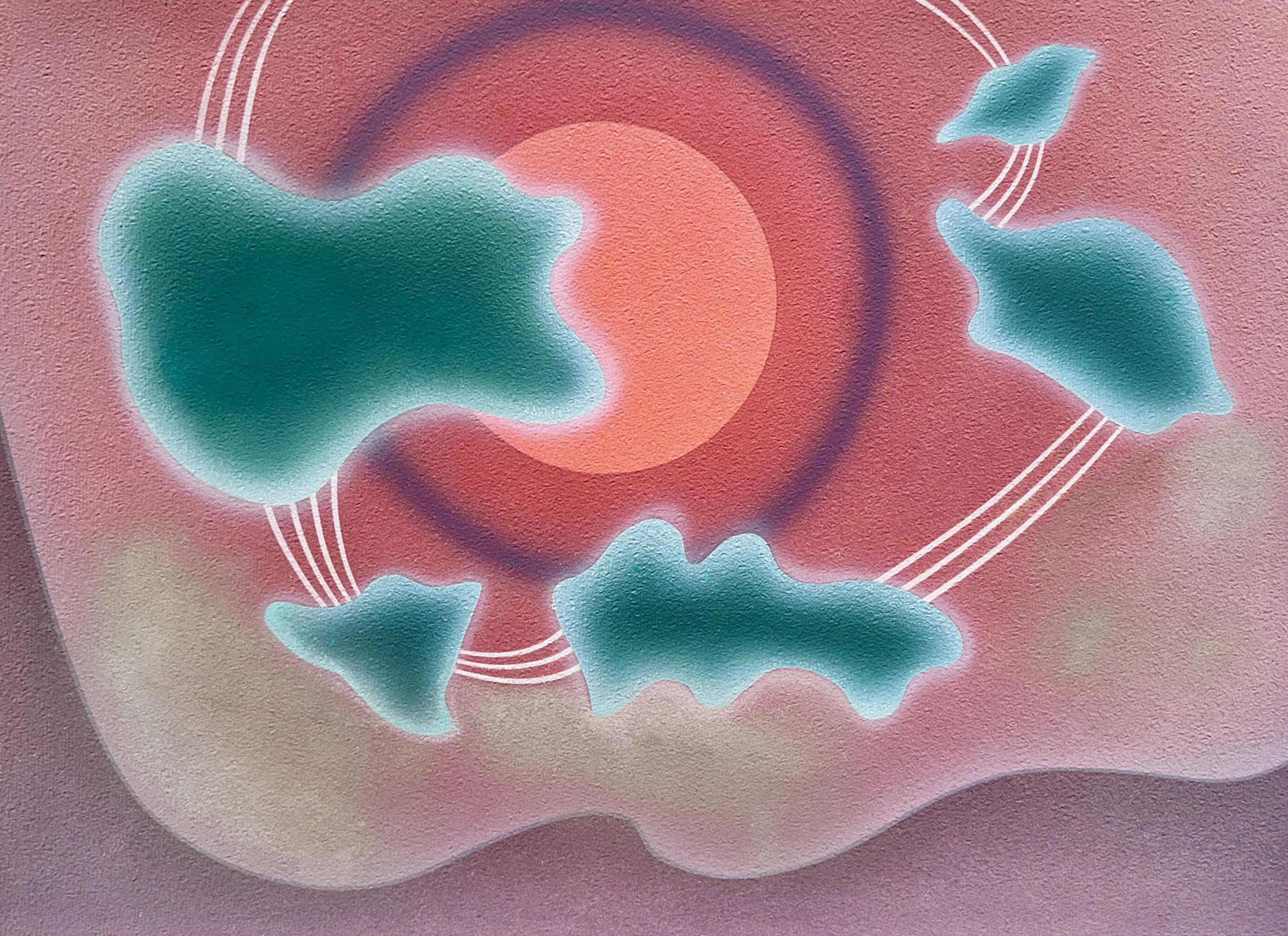
After the Second World War, a generation of Native Southwestern artists developed that while identifying with their Indian heritage wanted to move beyond the established Pueblo Flat Style by using new tools, materials, and techniques. Helen Hardin (Santa Clara Pueblo, 1943-1984) and David Chethlahe Paladin (Diné, 1926-1984) represent this generation in our exhibition. Paladin’s painting uses historical Indian sand paintings as a compositional idea. Sand paintings were traditionally used to act like a cosmic map or diagram to restore balance and health. Helen Hardin, the daughter of Pablita Velarde, evolved out of the flat style using Raymond Jonson’s spray technique. She learned the skill from Joe Herrera, son of Tonita Pena, who had studied with Jonson at the University of New Mexico in Albuquerque as part of the GI Bill. Hardin’s paintings reference ancient Pueblo ancestor imagery rather than ceremonial dances.
[ TOP ]
Modernism 1913-1950 | Realism of the 1930s and 1940s | Abstraction of the 1930s and 1940s | Post-War | Selected Biographies